
Forging Futures: An Evening on Mentorship and Pre-Workforce Development – Thu, 23 Oct, 2025

Forging Futures: An Evening on Mentorship and Pre-Workforce Development – Thu, 23 Oct, 2025

You are invited!

An Informational Evening on Pre-Workforce Development

Thursday, October 23, 2025 | 5:30 – 8:30pm

At Bendix Academy:  2285 Ore Creek Lane, Brighton MI 48114

You are invited to an exclusive evening when community and industry leaders will come together at Bendix Academy to explore solutions for advancing workforce development and experience our new Toolmanship Mentoring program.

This intimate gathering will feature inspiring keynote speakers, dynamic conversations, and strolling hors d’oeuvres. The event is designed to spark dialogue, foster partnerships, and highlight how Bendix Academy is preparing the next generation for skilled trades and mechanical self-reliance though our pre-workforce development curriculum for teens and pre-teens.

Evening events include:
  • Network with like-minded leaders who share a commitment to equipping our youth with problem-solving skills, confidence, and hands-on experience.
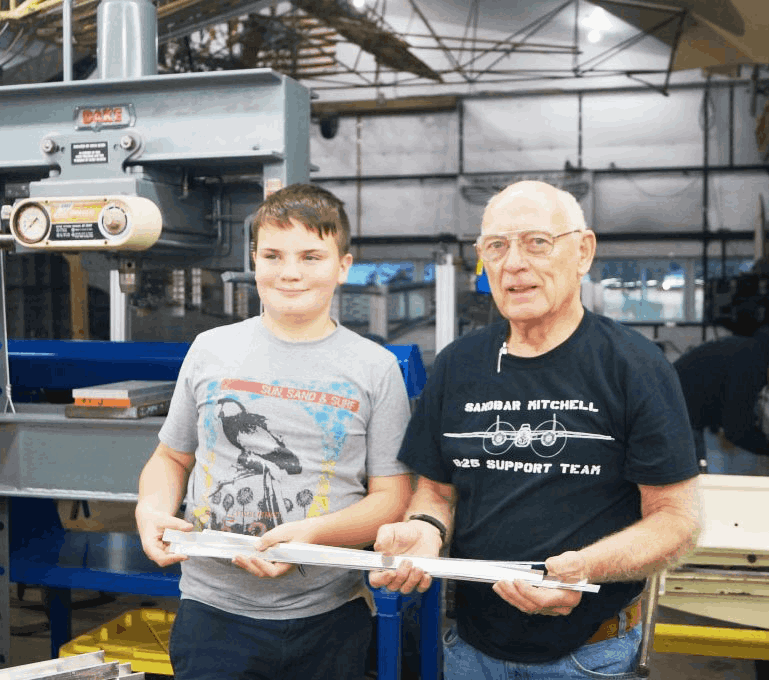
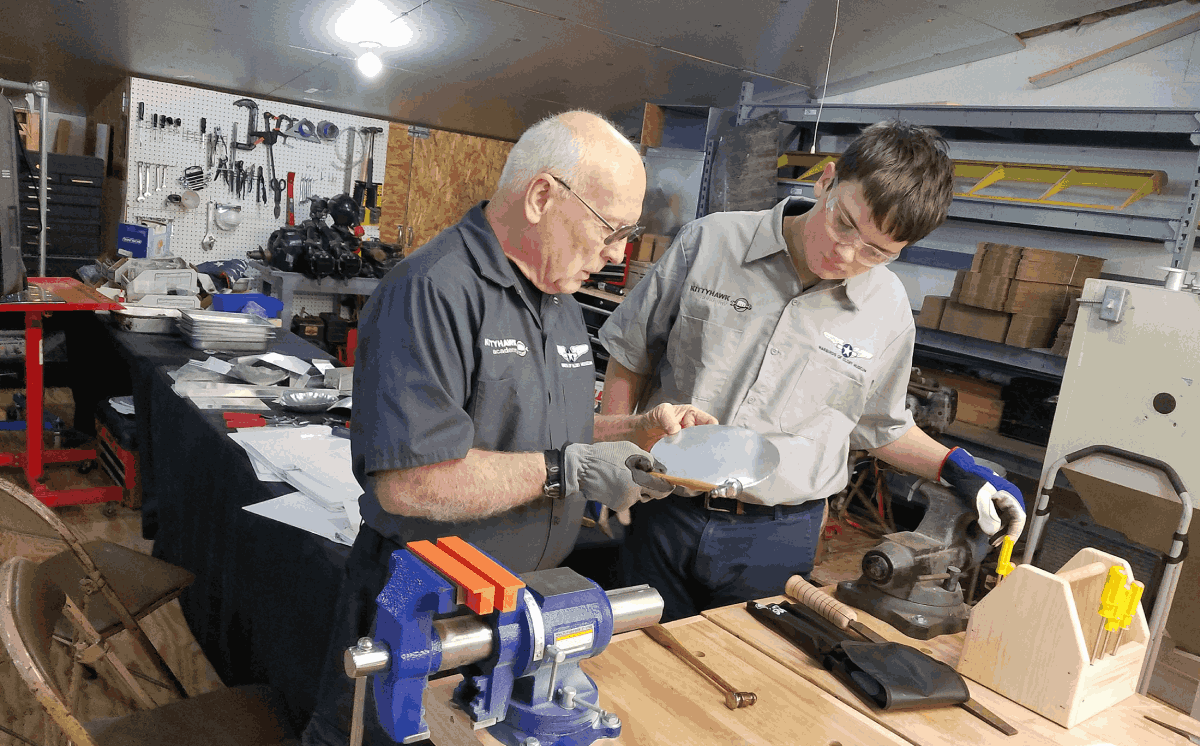
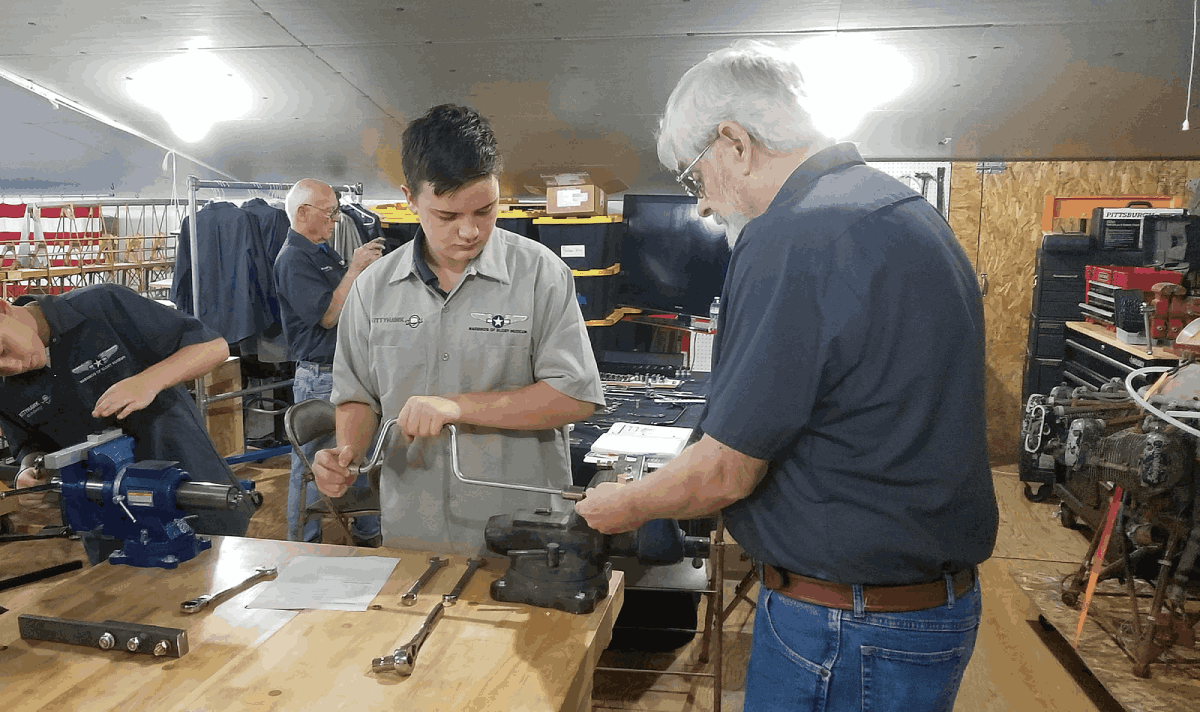
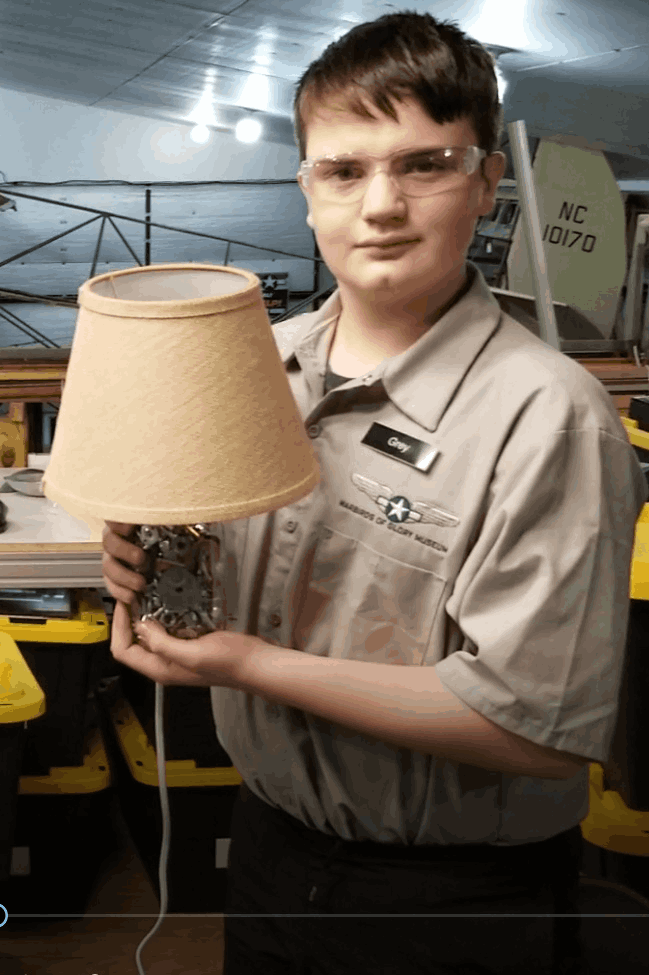
  • Witness the Bendix Academy toolmanship mentoring program and discuss its impact and position in future workforce development solutions.
  • Hear from respected local industry authorities who will speak to the workforce challenges facing our local community our nation at large.

Participation is limited. Please RSVP here to let us know you are coming, and download this flier to share with others to who may also want to attend!

Together we can build the bridge between today’s mentors and tomorrow’s skilled workforce.

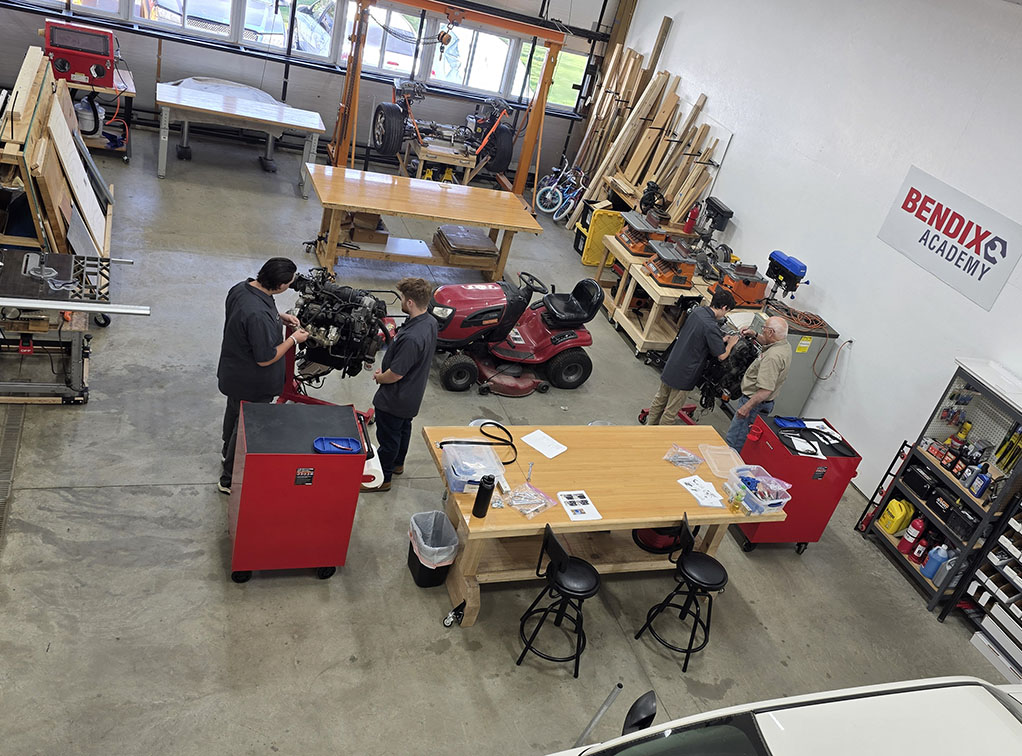
Can’t visit October 23 but still want to see our workshop?

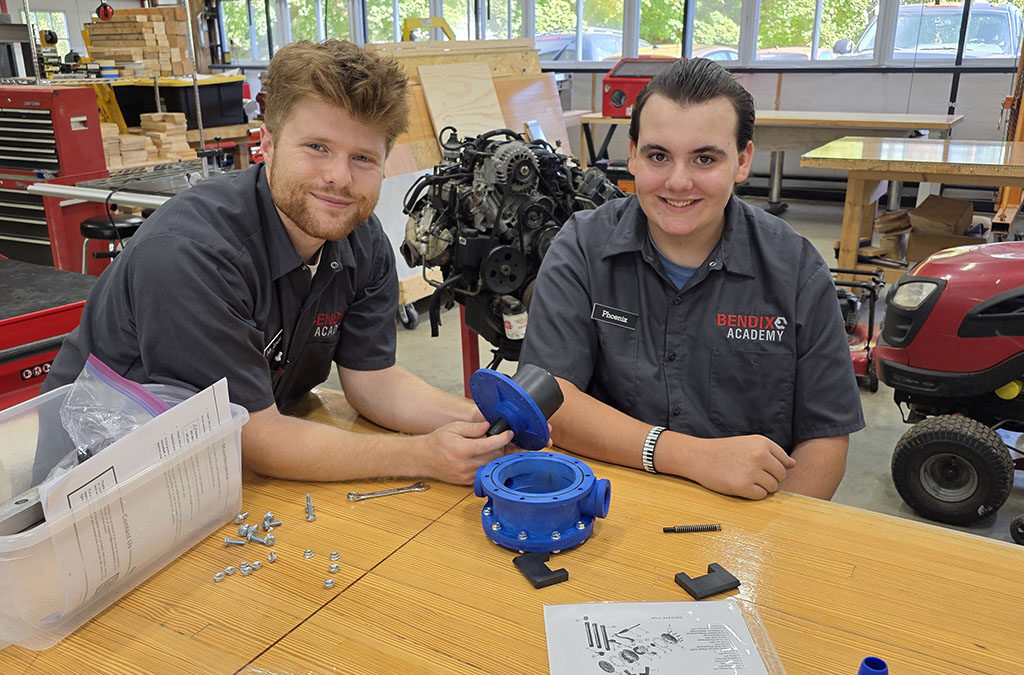
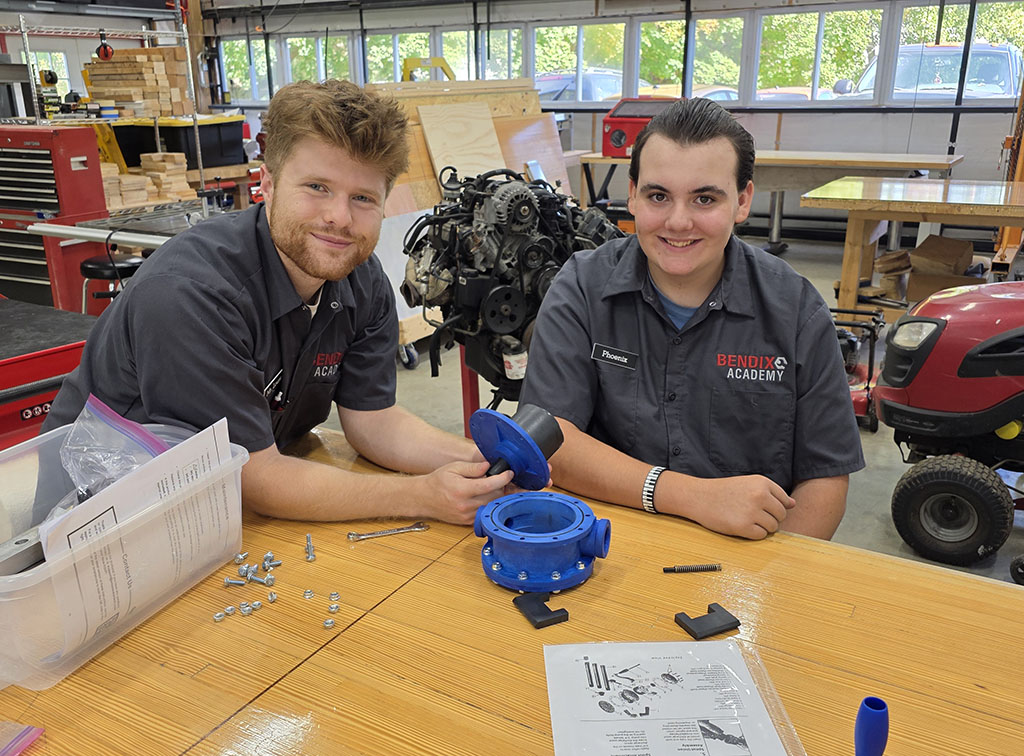
A picture speaks a thousand words but a visit is priceless!

Schedule a visit and experience the impact firsthand.

To contact Bendix Academy about this or other questions call 810-599-4035 or email toolmen@bendixacademy.org

See Bendix Academy in Action! 

Visit us, or have us present to your group.

A picture speaks a thousand words, but a visit is priceless.

Come visit our workshop!  Bendix Academy invites everyone with interest to email toolmen@bendixacademy.org or call us at 810-599-4035 to schedule a tour (no walk-ins please) and see why we're growing.


Can't visit us? We can visit you!

FRONT PAGE – Passing It On To The Next Generation

FRONT PAGE – Passing It On To The Next Generation

Every day at Bendix Academy, something substantive is being passed on. We bring together mentors and students who share skills, confidence, and a way of thinking that builds both hands and character, from one generation to the next.

As demand grows, from students eager to learn and communities seeking a stronger pre-workforce pipeline, we’re often asked how this all began, and where it’s going next. This issue tells that story: how we recognized the need for Toolmanship Mentoring, and the mission that continues to guide us, ensuring these vital skills are passed on to the next generation.

We have so much older talent in our community.

What a clever idea to use our experienced, older generations to teach toolmanship to the next generation.

Let’s pass it on to our young citizens.

Bendix Academy creates a place for generations to come together to spend time exploring, teaching, and learning the mechanical world together. Bendix Academy is merely the facilitator of available community resources to prepare our youth for the skilled workforce of tomorrow.

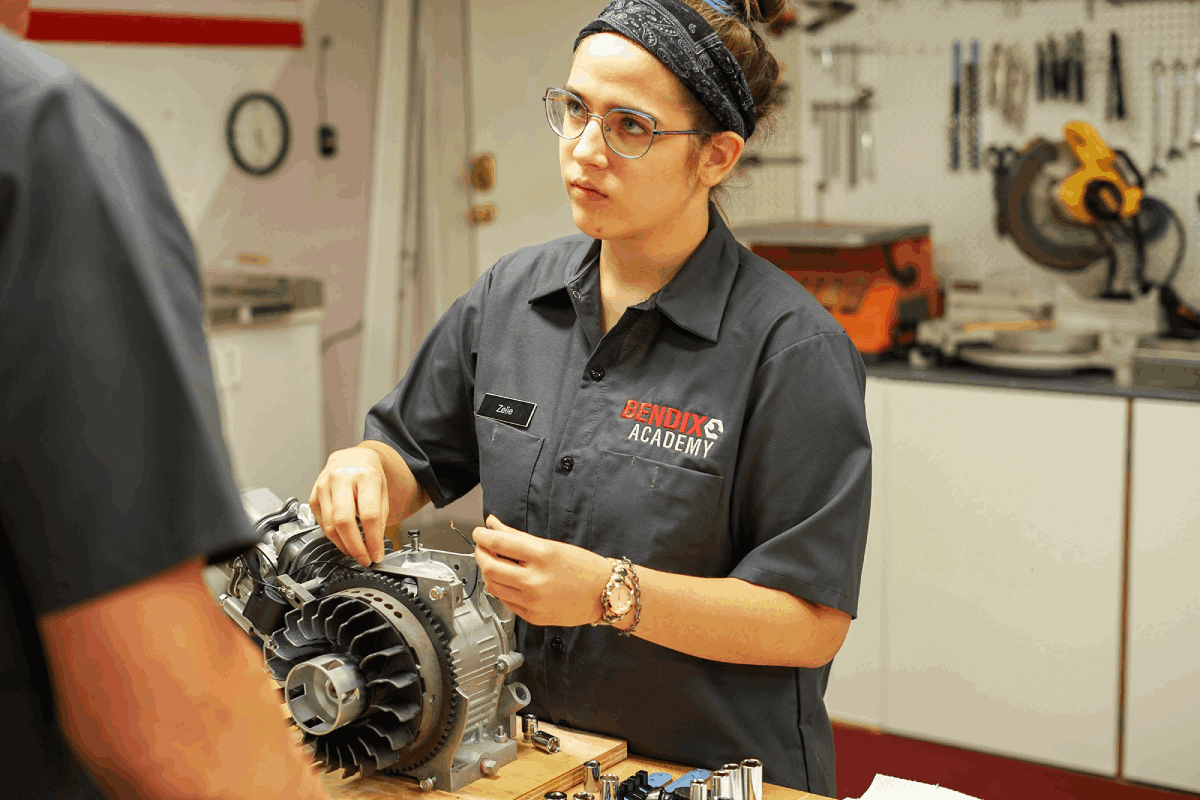
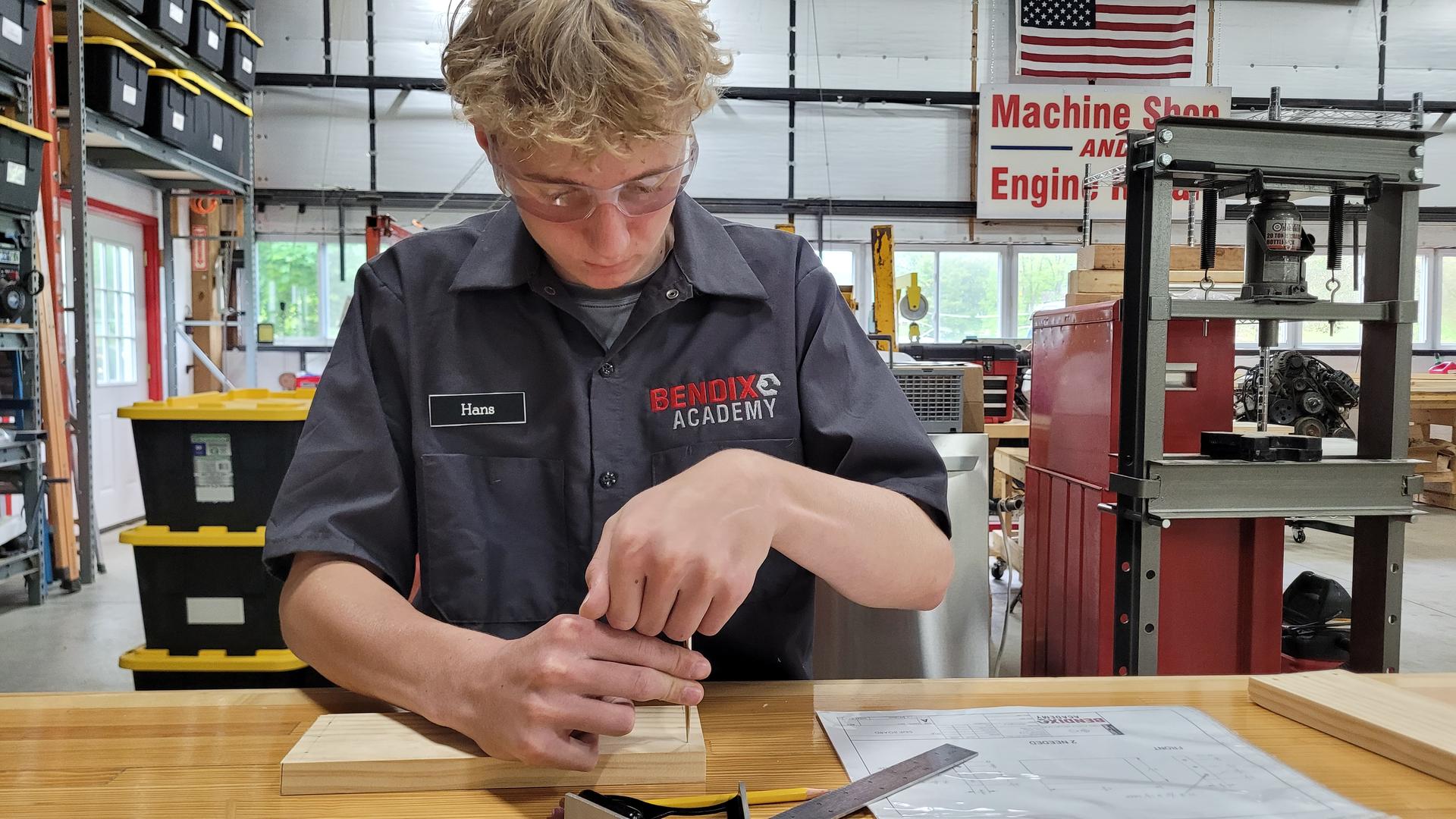
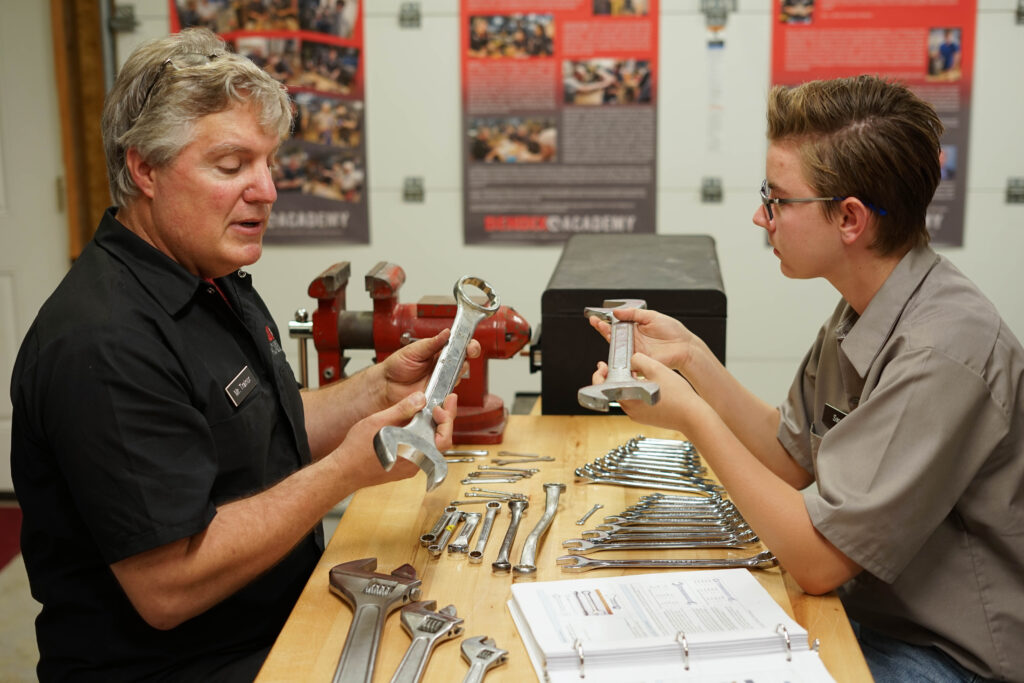
We schedule shoulder-to-shoulder Toolmanship lessons between students as young as 12 with a mentor that is often one, two or three generations older.

Respect, civility, and professional behavior are embedded in each lesson. Nothing but good comes from pairing generations together for a few hours a week.

For thousands of years, this kind of learning did not require a program, a curriculum, or even a name.

It happened naturally within families. Fathers, grandfathers, uncles, and neighbors passed down the use of tools, the understanding of materials, and the quiet confidence that comes from solving problems with one’s own hands. It was not formalized, but it was deeply understood—a responsibility carried by one generation to the next.

At Bendix Academy, we are intentionally restoring this ancient pattern—bringing it back with structure, consistency, and purpose—so that what was once naturally inherited can once again be reliably passed on.

Read Toolman Times Vol2 No1

Passing Mechanical Self-Reliance On to the Next Generation

The Way It Was - A Reflection by Our Founder Todd Trainor

Our Mission - One Sentence, A Lifetime of Meaning

History of Bendix Academy and Toolmanship Mentoring

Most Important Tools - Patience & Perseverance

Student Scholarship Fund - Spreading Toolmanship

See Bendix Academy in Action! 

Visit us, or have us present to your group.

A picture speaks a thousand words, but a visit is priceless.

Come visit our workshop!  Bendix Academy invites everyone with interest to email toolmen@bendixacademy.org or call us at 810-599-4035 to schedule a tour (no walk-ins please) and see why we're growing.


Can't visit us? We can visit you!

FOUNDER’S FORUM – The Way It Was

FOUNDER’S FORUM – The Way It Was

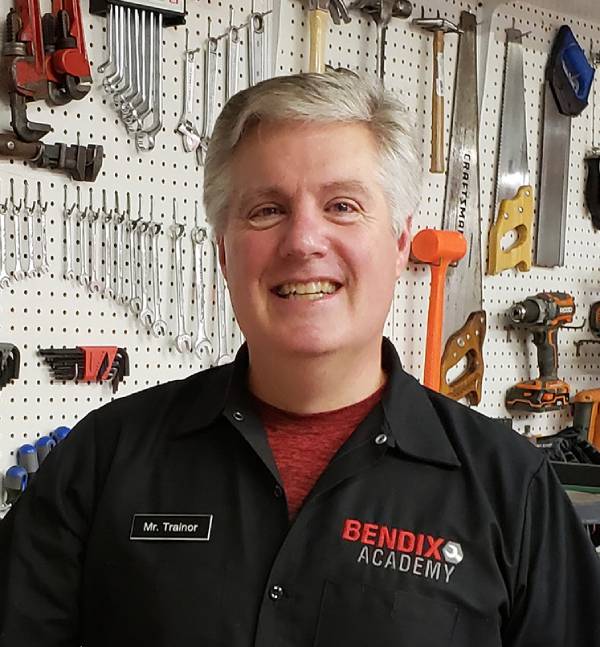
Todd Trainor, Founder, Bendix Academy

A Reflection

I think about when I grew up in the 70’s. It was a simpler world then, with a lot fewer distractions.

By Todd Trainor, Founder and Program Director of Bendix Academy

I often sought out time with my dad, eager to use my hands and head to fix things. He gladly taught me how to use tools, demonstrating how things worked, and urging me to learn, fail, correct, and grow.

Encouraged, I would “play” with dad’s tools to fix my bike, tinker with lawnmowers and mini-bikes, build forts, or scavenge parts to create new things.

I look back fondly on those times.

I recall the smell of engine grease on Dad’s rags and the sound of his impact wrench removing an axle nut. Most of all, I remember the grin that would spread on my dad’s face when he watched me triumph, a new skill added to my quiver of talents.

It’s a different world today.

More than ever, we need to find ways to break through modern distractions to encourage our youth to pursue and enjoy the gift of toolmanship lessons from the elders among us.

We must cultivate spaces and places for these generations to come together to spend time exploring, teaching, and learning the mechanical world together.

It’s an idea that’s both a throwback to the past and a look to the future. And it’s one that will build healthy tomorrows not only for countless youth, but for our country as well.

“We must cultivate spaces and places for these generations to come together to spend time exploring, teaching, and learning the mechanical world together.”

– Todd Trainor, Founder, Bendix Academy

Passing Mechanical Self-Reliance On to the Next Generation

The Way It Was - A Reflection by Our Founder Todd Trainor

Our Mission - One Sentence, A Lifetime of Meaning

History of Bendix Academy and Toolmanship Mentoring

Most Important Tools - Patience & Perseverance

Student Scholarship Fund - Spreading Toolmanship

See Bendix Academy in Action! 

Visit us, or have us present to your group.

A picture speaks a thousand words, but a visit is priceless.

Come visit our workshop!  Bendix Academy invites everyone with interest to email toolmen@bendixacademy.org or call us at 810-599-4035 to schedule a tour (no walk-ins please) and see why we're growing.


Can't visit us? We can visit you!

BOARDROOM BRIEF – Bendix Academy Mission — One Sentence, A Lifetime of Meaning

BOARDROOM BRIEF – Bendix Academy Mission — One Sentence, A Lifetime of Meaning

Ray's airplane
By Todd Trainor, Bendix Academy Founder & Program Director

The formal Bendix Academy Mission Statement reads:

“Bendix Academy equips young people with toolmanship, mechanical self-reliance, and career readiness through intergenerational mentorship that builds confidence, maturity, and life-long skills.”

Like all mission statements, it is one sentence. It is direct. It is distinct. And every word has meaning.

But I will tell you this plainly—there is far more behind that one sentence than it appears.

This mission is very dear to me. It is not simply a line in our literature. It is not something crafted to satisfy a grant application or sit neatly on a website. It is our essence. It is the distillation of a lifetime of experience, observation, concern, and ultimately, conviction.

As the founder of Bendix Academy, I feel personally responsible for articulating this mission properly. It represents not only what we do, but why we exist. It shows up everywhere—grant proposals, presentations, conversations with parents, discussions with industry leaders, and perhaps one day, even on a larger stage.

And yet, for those who want to understand us more deeply, I find that the mission statement invites explanation.

So I’d like to take you behind that one sentence—into the problem we see, the solution we are building, what we believe, and the deeper purpose that drives every lesson, every mentor, and every student who walks through our doors.

The Problem — A Slow-Moving Crisis

Many of us have seen it coming for years. In fact, I often describe it this way: we are watching a train wreck in slow motion.

Across our country, there is a growing shortage of people who possess mechanical skill—true, hands-on toolmanship.

This shortage affects the trades, engineering pathways, maintenance industries, and countless service roles that quietly keep our communities functioning every day. But the shortage did not happen overnight.

Bendix Academy Board Chair, Ray Krom

For generations—literally thousands of years—toolmanship was passed down within families. Fathers, grandfathers, uncles, neighbors—someone always showed the next generation how to use tools, how to fix things, how to build, how to think mechanically.

Then, something remarkable happened in the 20th century. Public schools stepped in. From roughly the 1940s through the 1980s, shop classes were common. Wood shop, metal shop, small engines—these were not electives for a few. They were a normal part of growing up. They provided exposure, confidence, and foundational skills to millions of young people.

And I would argue—they played a role in shaping one of the most capable, mechanically literate generations our country has ever seen. But beginning in the 1990s, those programs began to disappear. Quietly. Without much announcement. And without a plan to replace what was lost.

In many places, shop classes were removed or replaced with broader career and technical education programs. While valuable in their own right, these programs often do not emphasize foundational toolmanship as a life skill.

And here is the critical point: When schools stepped away from teaching these skills, the responsibility was effectively handed back to families. But families were not prepared to take it back. Generations had already passed since many parents themselves had learned these skills. The chain had already begun to break.

Today, we are living with the consequences: Young people reaching adulthood without basic mechanical confidence; A widening gap in workforce readiness for skilled trades and technical fields; Increased reliance on paid services for even the simplest repairs; A loss of self-reliance at the individual and family level; And a growing disconnect between people and the physical world around them. 

I could speak on this problem for hours. In many ways, I already have. But identifying the problem is only part of the story.

The Solution — Rebuilding What Was Lost

Bendix Academy exists to rebuild something that once happened naturally.  At its core, we are creating a place where generations come together—to teach, to learn, to explore the mechanical world side by side.

We are organized as a nonprofit because this work is not about profit.

It is about community. It is about Access. It is about IMPACT.

What we are doing is simple in concept, but powerful in execution: We are recreating the kind of mentoring I experienced growing up in the 1970s with my father and grandfather. There were no grades. There were no certifications. There was no curriculum binder sitting on a desk.

But there was something far more valuable: Time. Attention. Guidance. Expectation. And the quiet building of confidence.  At Bendix Academy, we have taken that model and made it available to students who may not otherwise have access to it.

We provide:

  • 2 to 2.5 hour lessons, allowing real immersion 
  • One-on-one mentoring, where each student receives focused attention 
  • Flexible scheduling, just like life actually works 
  • Volunteer mentors, many of whom are retired tradesmen and engineers 
  • A structured yet natural learning experience, guided by our EDHR methodology: Explain, Demonstrate, Hands-On, Review 

We operate outside of school—much like scouting has for over a century—but with a different focus.

And importantly: We do not measure success with grades. We measure success in confidence, capability, and character.

What We Believe — The Foundation Beneath the Mission

Our mission is built upon a deep set of beliefs, what we formally call our

  • Principle Beliefs, and
  • Core Values.

These are not decorative words. They guide how we teach, how we mentor, and how we interact with every student.

Let me share a few of the most important:

We believe in opportunity—that every young person should have access to learning toolmanship.


We believe that mechanical skill expands possibilities, regardless of one’s formal education path.


We believe in mechanical self-reliance—that the ability to repair, maintain, and build is essential to living an independent life.


We believe mentoring should be both organic and structured—natural in feel, but thoughtfully designed behind the scenes.


We believe every student is unique, requiring patience, adaptability, and respect for individuality.


We believe that a true toolman uses their skills for the common good—to serve others.


We believe in the power of generations learning together—preserving knowledge that would otherwise be lost.


We believe in stories—because stories carry wisdom in ways instruction alone cannot.


We believe in hands-on mastery—that real understanding comes from doing, not just observing.


We believe in discipline—organized workspaces, patience, perseverance, attention to detail.


We believe in professional behavior—even in a shop setting.


We believe in affordability—that no student should be turned away because of cost.


And importantly: We believe in passing it on. That mentorship is not a one-time event—but a cycle. Those who learn today will teach tomorrow.

Pre-Workforce Development…
What Comes BEFORE Everything Else

One of the phrases we use at Bendix Academy is “pre-workforce development.”

It is not a common phrase, but it should be. What we are doing is not job training, not certification, and not career selection. Very importantly,

It is what must come BEFORE all of those things.

Pre-workforce development is the formation of a young person’s: Capability, Character, Confidence, Work ethic, Problem-solving ability, Identity. 

It is the stage where a young person begins to understand: “I can figure things out.” Or, “I can fix things.” Or, “I can contribute.”

Yes, we teach toolmanship—hand tools, fasteners, materials, mechanical systems. But we are also teaching: Patience, Discipline, Professional conduct, Responsibility, Attention to detail, Pride in workmanship. These are the qualities that determine success in any path—whether that is the trades, engineering, or any other profession.

Workforce development builds on these. But it cannot replace them.

Our Impact — Far Beyond the Shop

Bendix Academy’s impact spans past, present, and future, reviving what once was, strengthening what is, and building what comes next.

In the past, mechanical skills were commonly passed down through generations, shaping self-reliant families and capable communities. Today, Bendix Academy restores that tradition through hands-on mentorship, where students gain practical skills or pursue pathways into trades and engineering, while mentors rediscover purpose and connection. 

The impact of this work extends far beyond the individual student and extends far into the future.

Students

For some students, this is a pathway toward a career: Trades, Engineering, or Technical services. 

For others, it is something equally important: The ability to be mechanically self-reliant in their personal lives. To fix things. To help others. To contribute wherever they go.

Mentors

For our mentors—many of whom are retired—this work provides purpose, meaningful activity, a way to pass on decades of experience, a renewed connection to the next generation, a deep satisfaction in teaching, and studies show that mental and physical health is extended when invovled in activites like mentoring.

Families

One mechanically capable person can change a family. They can reduce household costs, Solve problems quickly, help relatives and neighbors. This is how I grew up.

Communities

Communities become stronger when people help each other, when neighbors can assist neighbors, when small problems don’t turn into large ones, when people feel connected, and when local business are productive and profitable. 

Workforce

And speaking for local business and industries, the workforce benefits when we help rebuild the early stages of the talent pipeline and we help young people see mechanical work not as intimidating—but as approachable, even enjoyable.

The results are immediate: families benefit from problem-solvers at home, and communities grow stronger through shared capability and support.

Looking ahead, this work helps rebuild the early stages of the workforce pipeline, ensuring that future generations see mechanical work not as intimidating, but as accessible, valuable, and even inspiring.

Bendix Academy Boardroom 2025
Underlying Themes — What We Are Really Teaching

Beneath every hands-on lesson at Bendix Academy are deeper principles that shape how students think, act, and contribute to the world. They learn a sense of duty to help others, the importance of careful observation and attention to detail, and a respect for the ingenuity of those who came before them.

Through their work, they begin to understand how systems—and people—are interconnected, while developing discipline, adaptability, and professionalism.

We are teaching students:

That they have a duty to help others 

How to observe carefully and notice details 

How to respect the ingenuity of those who came before us 

How things are connected—literally and figuratively 

How to work with discipline and order 

How to adapt when things don’t go as planned 

How to carry oneself professionally 

These are not just shop skills, but life skills—lessons that remain with them long after the tools are put away.

A Mission That Cannot Fit in One Sentence

As you can see, we have put a great deal of thought into this. And yet, we still express it in one sentence. Because that is what a mission statement is meant to do.

But behind that sentence is a living, breathing body of work. A philosophy. A responsibility. A calling.

Bendix Academy Boardroom 2025
Bendix Academy Board Chair, Ray Krom

If you believe, as I do, that restoring mechanical self-reliance and mentorship is critical to the future of our communities—and our country—I invite you to support this work.

If you have questions, I welcome the conversation. And if you have the opportunity to visit us in person, I encourage you to do so.

Because once you see it—once you watch a student gain confidence, once you hear the stories shared between generations—you will understand.

This is more than a program. This is something worth rebuilding.

Passing Mechanical Self-Reliance On to the Next Generation

The Way It Was - A Reflection by Our Founder Todd Trainor

Our Mission - One Sentence, A Lifetime of Meaning

History of Bendix Academy and Toolmanship Mentoring

Most Important Tools - Patience & Perseverance

Student Scholarship Fund - Spreading Toolmanship

See Bendix Academy in Action! 

Visit us, or have us present to your group.

A picture speaks a thousand words, but a visit is priceless.

Come visit our workshop!  Bendix Academy invites everyone with interest to email toolmen@bendixacademy.org or call us at 810-599-4035 to schedule a tour (no walk-ins please) and see why we're growing.


Can't visit us? We can visit you!

FOUNDER’S FORUM – History of Bendix Academy

FOUNDER’S FORUM – History of Bendix Academy

Todd Trainor, Founder, Bendix Academy

By Todd Trainor, Founder and Program Director of Bendix Academy

I am often asked, 

“How did you come up with the idea for a toolmanship mentoring program?”

It’s an interesting beginning, so I thought I would share a brief history of the Bendix Academy Toolmanship Mentoring program—along with the inspiration and purpose-driven path that led to this work that is now changing lives daily, and even hourly, with every lesson we deliver.

I was the last of five children and one of thirteen grandchildren. My family was not wealthy. We were frugal. We fixed things when they broke and rarely bought new unless we absolutely had to. I learned so much from my father and grandfather during those years.

Eventually, I became an adult, attended college, and began my career. But throughout it all, I carried those early lessons with me—I continued to repair and make instead of buy, just as we had done growing up.

For much of my early adult life, I looked forward to the day when I would have children of my own and pass down the art and skill of using tools and solving problems, just as my father and grandfather had done for me—with love, patience, and perseverance. Sadly, after years of trying, my wife and I were never able to have children. It was deeply disappointing.

While I spent years working to reframe my life and find purpose without children, I began filling my spare time by teaching toolmanship skills to other people’s children. And one day, it struck me—this is my purpose.

It seems so clear to me now. I embrace it with passion and conviction. I believe this is God’s plan for me: to pass along the skills of using tools and solving mechanical problems to as many young people as possible. This is the gift I’ve been given, and I intend to give it away as often as I can.

And so, with a renewed vision and a sense of mission, I eventually founded Bendix Academy.

But there were important steps along the way—a personal journey that helped pave the path. Here is that story.

Early Seeds

In 2013, my friend Patrick and I launched the Warbirds of Glory Museum, centered around a crashed WWII B-25 bomber that we recovered from the Alaska wilderness.

The museum naturally attracted young teens who wanted to help restore this historic aircraft. In those early years, these teens often arrived with some level of mechanical skill already in place—skills they had learned from their fathers and grandfathers. Our role was to help them advance into more complex areas like aviation mechanisms, restoration techniques, and parts fabrication.

We never advertised a youth program. It simply happened. Each year, through word of mouth or a simple Facebook post, new teens would arrive, while older ones moved on to college, the Air Force, or careers.

Then something changed.

Around 2017, the steady flow of new teens stopped. The drop-off was sudden and noticeable.

It seemed to coincide with broader cultural shifts—smartphones, changing habits, and a different pace of life.

Many of the teens who came no longer had foundational mechanical skills from home. They wanted to work on the airplane—but didn’t yet know how to use basic tools.

– Todd noting changes with the advent of the cellphone

A Turning Point

Around that same time, my own life was shifting.

Although I had grown up with toolmanship skills, I had spent decades in the IT industry, starting in 1984 and eventually becoming a senior project manager implementing storage solutions for large companies. By 2017, I had grown weary of the corporate environment and stepped away.

It was also later in life that I discovered I am on the spectrum and have adult ADD—something I now recognize not as a limitation, but as a kind of superpower.

So 2017 became a year of change.

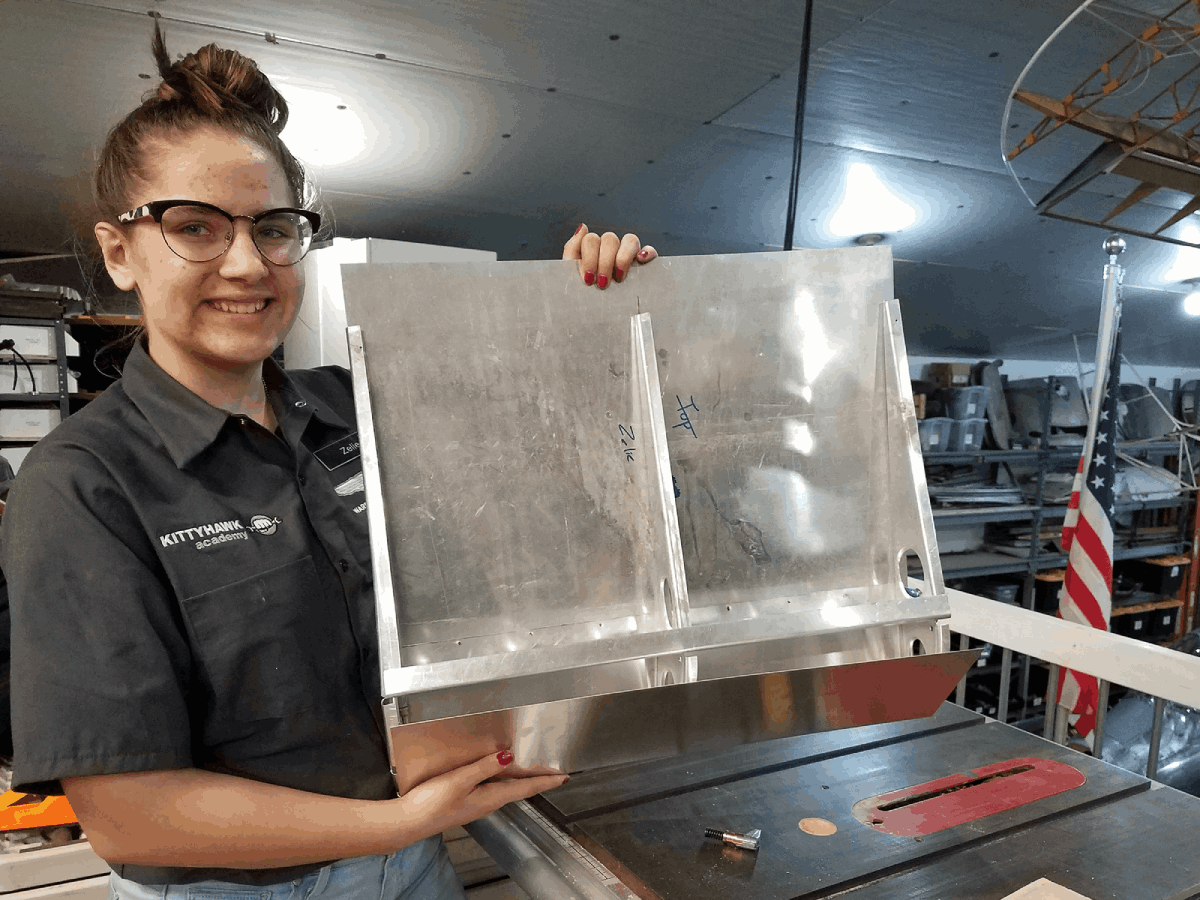
That was the year we launched a small internal program at the museum called Kittyhawk Academy.

Mr. Beckwith and I set up a modest space to provide foundational lessons to two neighborhood teens—teaching basic skills in tools, materials, and methods so that Patrick, our chief mechanic, didn’t have to start from scratch explaining how to turn a screwdriver.

A few days before each lesson, Mr. Beckwith and I—usually over lunch at Subway—would talk through ideas and sketch out the next lesson on a napkin.

We gathered tools and materials from around the shop. It was simple, informal, and unpolished.

There was no long-term plan. No intention of scaling it.

“It was, in many ways, the quintessential “afternoon with a grandparent.”

– Todd describing Kittyhawk

Above: Todd and mentors at Kittyhawk

First two Kittyhawk students

Something Bigger Emerges

Those two boys loved it. They came every week—after school and in the evenings.

Their mothers saw the progress and shared their experience with others. Soon, a third student joined—this time a girl. Then another. And another.

A pattern began to emerge.

I started documenting what we were doing and adding structure so the lessons could be repeated. Within a year, we had grown to 17 students and 11 mentors.

It was remarkable.

But we also noticed something important: many of the students were not interested in working on the B-25. They simply wanted to learn how to use tools and fix things.

So we expanded. We introduced lessons in plumbing, electrical, small engines, and general household repairs.

The program was still informal, but it was growing rapidly—and drifting away from its original purpose. There was no grand strategy. It simply evolved.

And in that evolution, we discovered something significant:

Our community lacked opportunities for young people to learn the art and skill of using tools and becoming mechanically capable.

The Birth of Bendix Academy

In late 2019, with permission from the museum board, I was given the opportunity to separate the program and carry forward the materials we had developed to form a new organization: Bendix Academy.

The goal was clear—to fill the growing void in our community for toolmanship mentoring opportunities for pre-teens and teens.

I stepped into the role of Founder and Executive Director. This would be the third nonprofit I had started.

The plan was ambitious but straightforward: take five months to secure a location, form the nonprofit, establish governance and standards, and begin mentoring again with our existing students.

But in March 2020, the COVID pandemic struck.

Everything paused.

The Pandemic Pause

What I initially saw as a delay became something else entirely.

For 18 months, what I now call the “Pandemic Pause,” a small core group of volunteers and I focused on building the foundation we would need. We worked on making lessons repeatable and consistent, defining our mission and vision, developing a curriculum, and organizing the structure of the program.

Looking back, that time was a gift.

I cannot imagine trying to build the organization while simultaneously delivering lessons at scale. That quiet season allowed us to do the deep work that would support everything that followed.

Starting Again

In early 2022, we officially launched Bendix Academy.

By then, our original Kittyhawk students had aged out and moved on. We were starting from scratch—with no students.

And not in a leased facility, as I had once imagined.

We started in my 20 x 20 garage, with one student and two mentors. We had no funding.

That season became a proving ground. We refined our early lesson plans, worked through challenges, built workbenches, and created meaningful hands-on experiences.

That year, we delivered 17 lessons to 4 students. Not many—but we were building something real.

I was very intentional about our pace. While there was clear potential to grow quickly, I was determined not to get out ahead of ourselves. That decision—to grow slowly and deliberately—has shaped who we are today.

The Story Continues

And the story is still being written.

In future issues, I’ll share more about how Bendix Academy has grown and the impact we are now seeing in students, families, and our community.

But none of this happens alone.

If this story resonates with you, I invite you to be part of what we are building. Your support helps us continue this work and expand it to reach more young people—right here in our community, and one day, far beyond it.

Passing Mechanical Self-Reliance On to the Next Generation

The Way It Was - A Reflection by Our Founder Todd Trainor

Our Mission - One Sentence, A Lifetime of Meaning

History of Bendix Academy and Toolmanship Mentoring

Most Important Tools - Patience & Perseverance

Student Scholarship Fund - Spreading Toolmanship

See Bendix Academy in Action! 

Visit us, or have us present to your group.

A picture speaks a thousand words, but a visit is priceless.

Come visit our workshop!  Bendix Academy invites everyone with interest to email toolmen@bendixacademy.org or call us at 810-599-4035 to schedule a tour (no walk-ins please) and see why we're growing.


Can't visit us? We can visit you!

TOOLMAN TIPS – The Most Important Tools

TOOLMAN TIPS – The Most Important Tools

Patience & Perseverance

In most of our newsletters, we like to share something practical, something you can hold in your hand, adjust, tighten, or fix. But this month, we want to step back and talk about tools that don’t hang on the wall or sit in a toolbox. These are the tools that live in your mind and shape every outcome long before a wrench ever touches a bolt. If toolmanship is the art of working with tools, then we must also recognize that the toolman himself is the most important tool in the shop.

Patience: Try again…

The first of these is patience. We would argue that patience is not just important, it is the most important tool a toolman possesses. It is also one of the hardest for young people to learn, especially in a world that rewards speed and instant results. But in the shop, impatience has consequences.

Many of us have felt that moment when a stubborn bolt refuses to turn. You lean in a little harder. Maybe you grab a bigger wrench. Maybe you give it a few taps with a hammer. And somewhere in the back of your mind, there’s a quiet warning: this is about to break. That moment is where toolmanship is either proven or lost.

An experienced toolman knows when to stop. Not quit — stop. There is a difference. Instead of forcing the issue, he steps back and changes the approach. He might apply heat with a torch to expand the metal. He might introduce penetrating oil and let it work its way in over hours, not minutes. He might simply take more time to study how the parts are assembled before making the next move. In some cases, he’ll walk away entirely and come back later with a clearer head. That is patience in action. It is not passive; it is deliberate, thoughtful, and disciplined.

Patience also shows itself in the willingness to seek understanding before action. Rather than guessing and risking damage, a good toolman will pause to research, ask a mentor, or study a diagram. Today, that might mean looking something up online, using AI, or calling someone with more experience. There is no shame in that. In fact, it is a mark of maturity.

Perseverance: …and keep trying.

​Closely tied to patience is perseverance, which we would call the second most important tool a toolman carries. While patience teaches us when to pause and rethink, perseverance teaches us not to give up.

Every project eventually presents a problem that doesn’t yield easily. A stripped fastener, a misaligned component, a tool that won’t quite fit the way you need it to, these are moments where frustration can creep in. But good toolmen do not walk away defeated. They adapt.

Perseverance means trying a different method. It means reaching for a different tool, adjusting your angle, changing your posture, or even rethinking the entire approach. There’s a saying often attributed to Albert Einstein: insanity is doing the same thing over and over again while expecting different results.

“Insanity is doing the same thing over and over again and expecting different results.” 

In the shop, that lesson becomes very real. If something isn’t working, repeating the same action is rarely the answer. Instead, perseverance calls for creativity and problem-solving. It asks you to think, to observe, and to try again, a great road to success.

Always remember, the goal is not to prove how much you already know, but to ensure the job is done correctly. Over time, these small decisions build into a reputation—one of care, precision, and reliability.


A Powerful Perspective

Perspective

There is one more perspective that we believe is essential, and it may sound simple, but it is powerful: the object you are working on is not working against you. That stubborn bolt does not have an attitude, ulterior motive, sense or humor, trying to impress you, competitive, manipulative. It is just an just an object, subject to the laws of physics and time. When we forget this, mistakes happen.

“Because people can frustrate or irritate me, I am often heard saying, ‘I’d rather work three hours on stubborn bolt than to work with that person for 3 minutes.’ 

“I find serenity in working alone on mechanical projects, because there is no one to get frustrated by except myself, in which case that can often be resolved with patience and perseverance.”

Patience and perseverance are invisible tools. They do not hang on the wall, sit in a drawer, or come in a socket set. They reside in the toolman’s mind, ready to be applied when the moment calls for them. Knowing when to reach for these tools is one of the clearest marks of maturity and experience. Many people can swing a hammer or turn a wrench, but not everyone knows when to slow down, think carefully, and persist through difficulty.

At Bendix Academy, beside the wrenches, hammers, and sockets, our students will find two small containers labeled Patience and Perseverance. Though empty to the eye, they are full of meaning. They remind our students that some of the most important tools in the shop cannot be touched by hand. There are moments when adding more force is the wrong answer, when frustration clouds judgment, or when the next best step is to pause, rethink, and try again with a clearer mind.

Wisdom is knowing when to apply a generous amount of patience to the task before you, and when to add perseverance so you do not give up too soon. Very often, the solution to a difficult problem is not found in a larger hammer or longer wrench, but in the disciplined use of these unseen tools.

Passing Mechanical Self-Reliance On to the Next Generation

The Way It Was - A Reflection by Our Founder Todd Trainor

Our Mission - One Sentence, A Lifetime of Meaning

History of Bendix Academy and Toolmanship Mentoring

Most Important Tools - Patience & Perseverance

Student Scholarship Fund - Spreading Toolmanship

See Bendix Academy in Action! 

Visit us, or have us present to your group.

A picture speaks a thousand words, but a visit is priceless.

Come visit our workshop!  Bendix Academy invites everyone with interest to email toolmen@bendixacademy.org or call us at 810-599-4035 to schedule a tour (no walk-ins please) and see why we're growing.


Can't visit us? We can visit you!

DIRECTORS DESK – The Gift of Toolmanship

DIRECTORS DESK – The Gift of Toolmanship

Passing Toolmanship Forward – And Making Sure Everyone Can Learn

Vision: Provide toolmanship mentoring to any student who wants to learn mechanical self-reliance

Automotive Lessons

At Bendix Academy, the goal has always been straightforward:

Every student who wants to learn toolmanship should have the opportunity to do so.

That idea sits at the center of everything: our history, our mission, and our vision as we grow the program. From the earliest one-on-one mentoring sessions to today’s expanding demand, the model has remained the same: Skilled mentors working side by side with students, passing on practical knowledge, discipline, and confidence.

But as the program has grown, and as diligent as we are in keeping costs down, something else has become clear. Not every student who wants to be here can easily afford to do so.

Plumbing Lessons

The Reality Behind Access

Bendix Academy is built around intensive, one-on-one instruction. Each lesson is hands-on, mentor-led, and designed to meet a student where they are and move them forward. To sustain that model, there is a $40 fee for a three-hour lesson.

For many families, that’s manageable. For others, it’s a barrier, and when the mission is to reach every student who wants to learn, even a modest barrier matters.

Electrical Lessons

Why the Scholarship Fund Exists

The student scholarship fund exists for one reason: To make sure cost is not the reason a student doesn’t learn to become mechanically self-reliant.

It allows students, regardless of financial situation, to step into the shop, pick up tools, and begin learning. It ensures that access to mentorship, hands-on experience, and mechanical self-reliance is based on interest and commitment, not income.

Every dollar in that fund goes directly toward reducing that barrier. It’s not abstract or administrative. It’s tangible:

  • A student getting another lesson
  • A family saying yes when they otherwise couldn’t
  • A mentor able to continue working with a student who is ready to learn

Woodworking Lessons

Growth Makes This More Important

Demand for Bendix Academy continues to grow with more students, more families, more mentors, and more volunteers. Just as important, there is increasing recognition across our community, our state, and beyond that this kind of hands-on, mentor-based learning fills a real need.

We are working steadily to expand by adding workbenches, training additional mentors, and securing the space needed to serve more students. A key goal is to reduce the waitlist while maintaining the quality of one-on-one instruction that defines the program.

As we grow, there is a constant balance to maintain. Expanding capacity brings real costs, but access must remain open and affordable for the students who want to be here. Growth only matters if students can participate.

The Student Scholarship Fund is what makes that balance possible, ensuring that as Bendix Academy expands, opportunity expands with it.

A Practical Way to Help

Not everyone can volunteer or be a mentor in the shop each week. But supporting the Student Scholarship Fund is a direct, practical way to be part of the mission.

It’s straightforward:

Every dollar goes toward reducing financial barriers for students who want to learn.

If you’re in a position to help, consider making a contribution of any amount to the Student Scholarship Fund. And if you want your support to extend beyond a single moment, a monthly gift through the Sustainer’s Circle provides steady, reliable access for students over time.

This is how access is built and sustained—one lesson, one student, one decision to support this vision now, as we build a strong foundation for a thriving future.

Your gift of any amount today brings mechanical self-reliance to future generations.

Support Tomorrow’s Toolmen Today!

From the Director’s Desk…

Bendix Academy is restoring something that used to be common: learning by doing, side by side with someone who knows. The results are real in building true confidence, capability, and direction for students who may not find that anywhere else. That’s why this matters to me, and why it should matter to all of us.

As Executive and Development Director of Bendix Academy, I’ve spent my career in nonprofits, but this mission is personal in a different way. I’ve seen what happens when knowledge is passed from one generation to the next, and what happens when that connection is lost.

This about much more than tools. It’s about making sure every student who wants to learn has the opportunity to do so, and that we don’t lose the skills, mindset, and mentorship that build strong people and strong communities. 

If you’d like to learn more or get involved—whether by volunteering your time, mentoring, or supporting the mission through in-kind or financial contributions, I’d welcome the conversation. You can reach me at wendy@bendixacademy.org

TIME

Volunteering at Bendix Academy is straightforward and flexible: there are many ways to contribute based on your time and interests.

Learn more here!

TALENT

Do you have toolmanship skills and a desire to share them? Mentors Matter! YOU can have a lasting impact in building someone’s future by sharing your experience. If you are a:

Learn more here!

TREASURE

Your gift of ANY size helps ensure the next generation’s pre-workforce development and mechanical self-reliance. Consider any of the following:


Learn more here!

Passing Mechanical Self-Reliance On to the Next Generation

The Way It Was - A Reflection by Our Founder Todd Trainor

Our Mission - One Sentence, A Lifetime of Meaning

History of Bendix Academy and Toolmanship Mentoring

Most Important Tools - Patience & Perseverance

Student Scholarship Fund - Spreading Toolmanship

Book Bendix Academy for Your Next Event

Bring the inspiring mission of Bendix Academy to your organization or group! Todd Trainor and Wendy Zielen offer engaging presentations on "Tomorrow's Toolment Today," blending stories of mentorship, mechanical skills, and community impact. Whether you’re reminiscing about shop class or exploring how to empower the next generation, their talks spark connections and inspire action. Perfect for schools, community groups, professional organizations, and more.


Contact us today to book your session and join the revival!