TOOLMAN TIPS – The Most Important Tools
Patience & Perseverance
In most of our newsletters, we like to share something practical, something you can hold in your hand, adjust, tighten, or fix. But this month, we want to step back and talk about tools that don’t hang on the wall or sit in a toolbox. These are the tools that live in your mind and shape every outcome long before a wrench ever touches a bolt. If toolmanship is the art of working with tools, then we must also recognize that the toolman himself is the most important tool in the shop.
Patience: Try again…
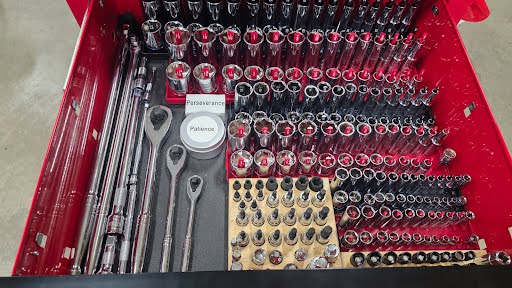
The first of these is patience. We would argue that patience is not just important, it is the most important tool a toolman possesses. It is also one of the hardest for young people to learn, especially in a world that rewards speed and instant results. But in the shop, impatience has consequences.
 Many of us have felt that moment when a stubborn bolt refuses to turn. You lean in a little harder. Maybe you grab a bigger wrench. Maybe you give it a few taps with a hammer. And somewhere in the back of your mind, there’s a quiet warning: this is about to break. That moment is where toolmanship is either proven or lost.
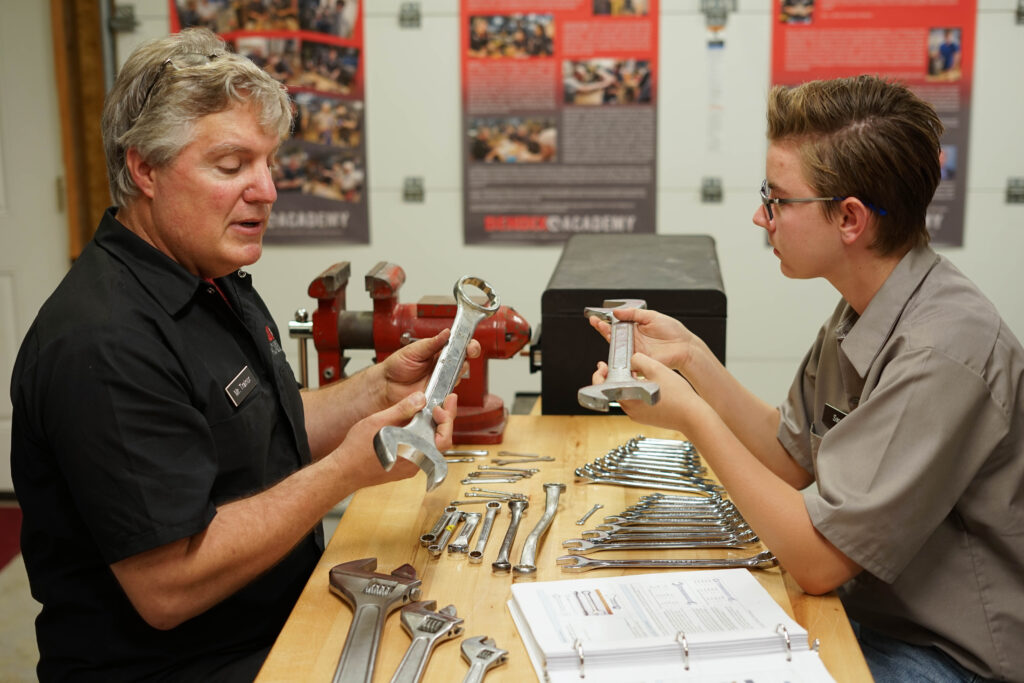
 An experienced toolman knows when to stop. Not quit — stop. There is a difference. Instead of forcing the issue, he steps back and changes the approach. He might apply heat with a torch to expand the metal. He might introduce penetrating oil and let it work its way in over hours, not minutes. He might simply take more time to study how the parts are assembled before making the next move. In some cases, he’ll walk away entirely and come back later with a clearer head. That is patience in action. It is not passive; it is deliberate, thoughtful, and disciplined.
 Patience also shows itself in the willingness to seek understanding before action. Rather than guessing and risking damage, a good toolman will pause to research, ask a mentor, or study a diagram. Today, that might mean looking something up online, using AI, or calling someone with more experience. There is no shame in that. In fact, it is a mark of maturity.
Perseverance: …and keep trying.
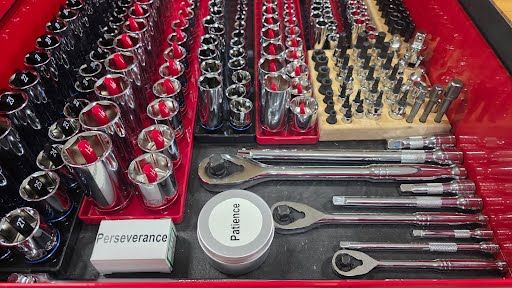
 Closely tied to patience is perseverance, which we would call the second most important tool a toolman carries. While patience teaches us when to pause and rethink, perseverance teaches us not to give up.
Every project eventually presents a problem that doesn’t yield easily. A stripped fastener, a misaligned component, a tool that won’t quite fit the way you need it to, these are moments where frustration can creep in. But good toolmen do not walk away defeated. They adapt.
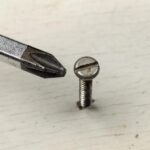 Perseverance means trying a different method. It means reaching for a different tool, adjusting your angle, changing your posture, or even rethinking the entire approach. There’s a saying often attributed to Albert Einstein: insanity is doing the same thing over and over again while expecting different results.
“Insanity is doing the same thing over and over again and expecting different results.”
In the shop, that lesson becomes very real. If something isn’t working, repeating the same action is rarely the answer. Instead, perseverance calls for creativity and problem-solving. It asks you to think, to observe, and to try again, a great road to success.
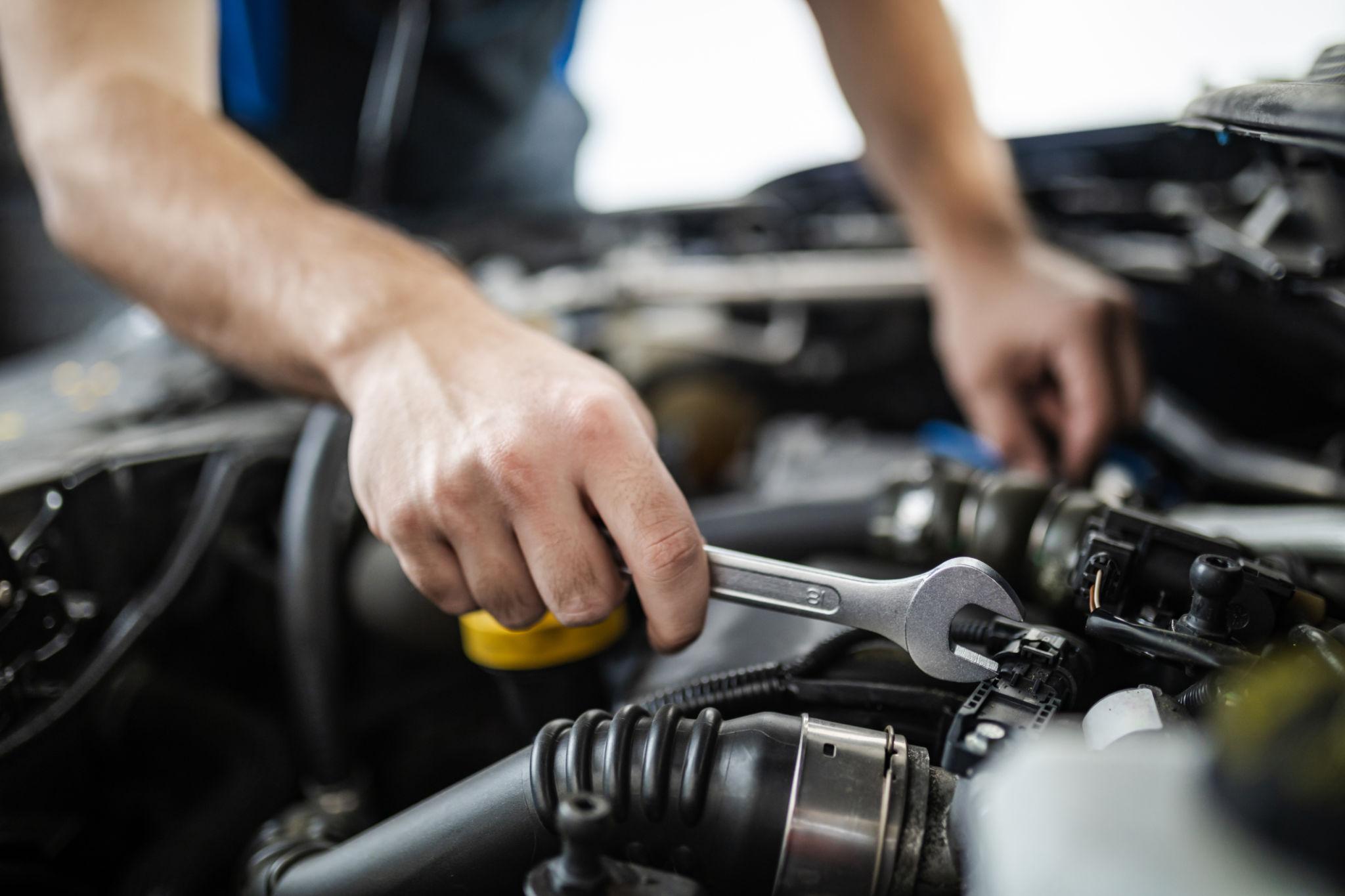
Always remember, the goal is not to prove how much you already know, but to ensure the job is done correctly. Over time, these small decisions build into a reputation—one of care, precision, and reliability.
A Powerful Perspective
Perspective
There is one more perspective that we believe is essential, and it may sound simple, but it is powerful: the object you are working on is not working against you. That stubborn bolt does not have an attitude, ulterior motive, sense or humor, trying to impress you, competitive, manipulative. It is just an just an object, subject to the laws of physics and time. When we forget this, mistakes happen.
“Because people can frustrate or irritate me, I am often heard saying, ‘I’d rather work three hours on stubborn bolt than to work with that person for 3 minutes.’
“I find serenity in working alone on mechanical projects, because there is no one to get frustrated by except myself, in which case that can often be resolved with patience and perseverance.”
 Patience and perseverance are invisible tools. They do not hang on the wall, sit in a drawer, or come in a socket set. They reside in the toolman’s mind, ready to be applied when the moment calls for them. Knowing when to reach for these tools is one of the clearest marks of maturity and experience. Many people can swing a hammer or turn a wrench, but not everyone knows when to slow down, think carefully, and persist through difficulty.
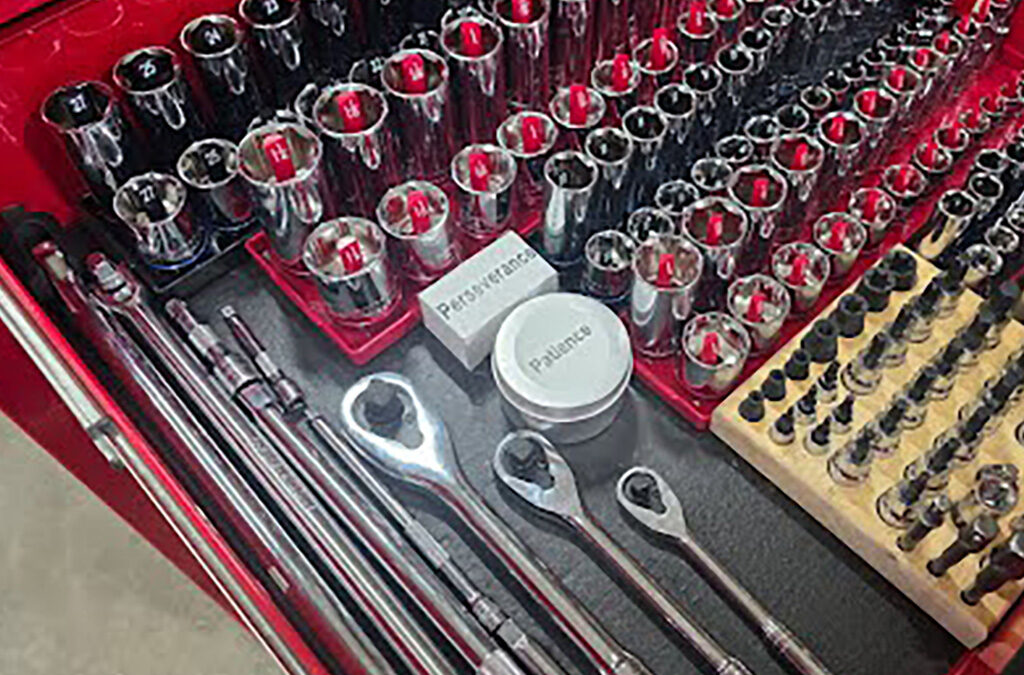
At Bendix Academy, beside the wrenches, hammers, and sockets, our students will find two small containers labeled Patience and Perseverance. Though empty to the eye, they are full of meaning. They remind our students that some of the most important tools in the shop cannot be touched by hand. There are moments when adding more force is the wrong answer, when frustration clouds judgment, or when the next best step is to pause, rethink, and try again with a clearer mind.
Wisdom is knowing when to apply a generous amount of patience to the task before you, and when to add perseverance so you do not give up too soon. Very often, the solution to a difficult problem is not found in a larger hammer or longer wrench, but in the disciplined use of these unseen tools.
Read Toolman Times Vol. 2, No. 1 – Spring 2026 articles below:
Passing Mechanical Self-Reliance On to the Next Generation

The Way It Was - A Reflection by Our Founder Todd Trainor
Our Mission - One Sentence, A Lifetime of Meaning
History of Bendix Academy and Toolmanship Mentoring
Most Important Tools - Patience & Perseverance
Student Scholarship Fund - Spreading Toolmanship


 Is the door too high or low? Too far left or right? Tilted? Sticking out too far or recessed too deep?