FRONT PAGE – Why Mentors Matter: Meet the Makers of Mechanical Self-Reliance

FRONT PAGE – Why Mentors Matter: Meet the Makers of Mechanical Self-Reliance

Building Confidence, Craftsmanship, and the Future

At Bendix Academy, we believe that toolmanship is more than turning wrenches—it’s a mindset, a method, and a mission. It’s how we teach confidence, build character, and pass along the practical skills that shape lives. And at the center of it all are our mentors—real people with real experience, guiding the next generation not just in how to fix things, but how to think, problem-solve, and thrive.

In this issue of Toolmen Times we address mentorship across generations, from aviation students like Jude Louria to longtime restoration experts like Roger Ashley. The value of mentorship echoes in every hammer swing, every diagnosis, and every “ah-ha” moment as we work to restore Mechanical Self-Reliance.

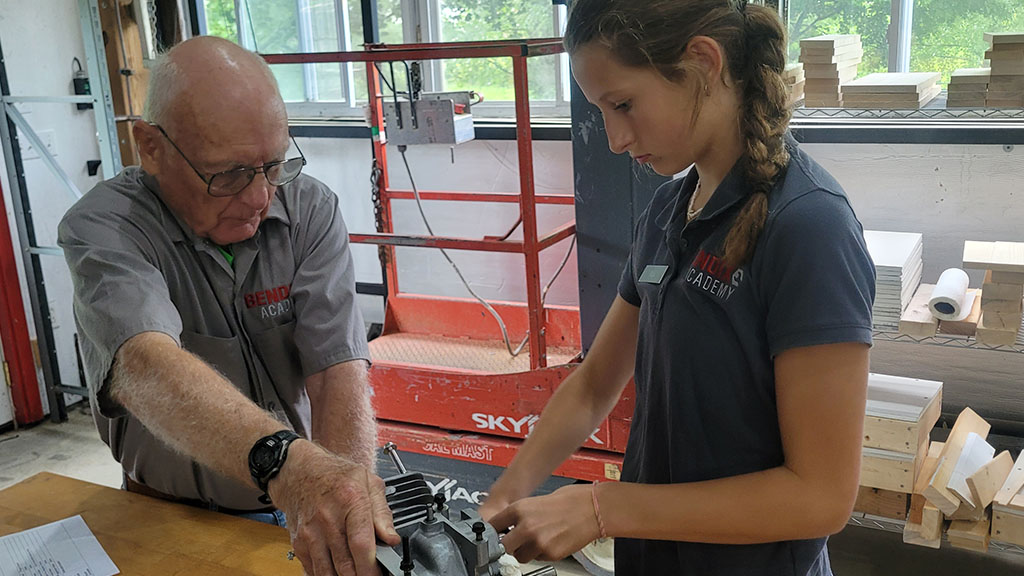
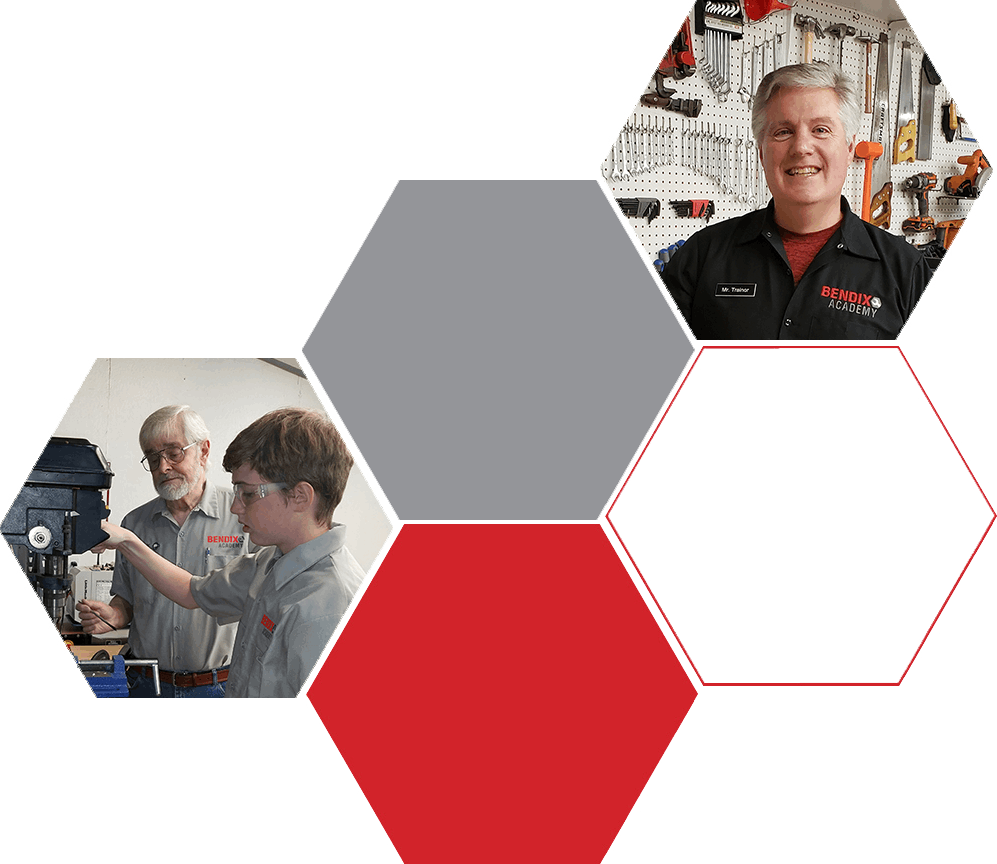
Mentors and student study Briggs & Stratton motor

“When something clicks—when a student realizes they can do it themselves—it’s incredible,”

~ Jude Louria, Flight Instructor and dedicated Bendix Academy mentor.

Jude Louria was raised in a do-it-yourself household where every move meant a new project. He developed toolmanship through hands-on problem-solving, fixing decks, restoring floors, troubleshooting creaky doors, and eventually, rebuilding engines. As he moved from puzzle tables to pilot training, Jude discovered a passion for teaching others what he had learned. Jude’s path—from flashlight-holding helper to flight instructor—reflects the very heart of Bendix Academy’s mission.

Today, at the age of 22, Jude finds joy in mentoring students at Bendix Academy, watching them grow in skill and confidence, one project at a time. His ability to break down complex tasks, whether it’s diagnosing an engine or teaching tool safety, helps students not only build things, but believe in themselves. For Jude, mentorship is about helping young people discover their own capability and the confidence that comes from doing something real with their own two hands.

Read more about what makes Jude a great mentor here.

Roger Ashley

From farm tractors to lunar rovers, Roger Ashley’s journey as a toolman and mentor began on a 100-acre farm outside Flint, where early mornings, milking machines, and makeshift generators taught him how to solve problems under pressure. Those experiences led to careers in farming, automotive safety, and even aerospace where he helped track parts for the Lunar Rover at Bendix Aerospace in the 1960s.

Now retired, Roger hasn’t slowed down. He restores vintage Farmall tractors, donates vehicles for student learning, and shares the kind of mechanical wisdom you can’t find in manuals. 

Roger’s hands-on guidance, whether teaching his grandson to use an air wrench or sharing his wisdom with students and staff at Bendix Academy, reflects a lifetime of learning—and giving back to members of the community far and wide.

Read more about how mentoring and toolmanship defined Roger’s career here.

“Too many young people haven’t had the chance to use tools, Knowing how to repair things builds independence and self-worth. That’s what we’re passing on.”

~ Roger Ashley, Lifelong toolman

🔧 Why Mentorship Matters More Than Ever

We’ve seen firsthand how mentorship can shape a future.

Whether it’s Jude helping a student understand the basics of torque or Roger sharing the story of restoring a buried tractor, the result is the same: Students walk away empowered!

Today, many students grow up without regular access to tools, trades, or mentors who can show them how to build or repair. At Bendix Academy, we’re changing that—one student, one tool, one moment at a time. Our Toolmanship Mentoring Program gives middle and high school students the chance to:

  • Learn hands-on skills in mechanics, carpentry, and engineering
  • Gain confidence through trial-and-error and real-world problem-solving
  • Receive guidance from experienced adults who know what it means to get the job done right

🔧 Why Become a Mentor?

If you know your way around tools, machines, or even just everyday fix-it challenges, you already have what it takes to make a difference. Our mentors come from all walks of life—contractors, engineers, veterans, DIYers, tradespeople, mechanics, tinkerers, and educators—but they share one thing in common: a desire to pass it on.

As a mentor at Bendix Academy, you’ll:

  • Help students learn to think through problems, not just follow instructions
  • Share life lessons through meaningful, hands-on projects
  • Join a supportive community that values creativity, craftsmanship, and curiosity
  • Inspire confidence in young people—some of whom have never held a screwdriver before

Whether you have years of trade experience or just a solid set of practical skills, mentorship here isn’t about being perfect—it’s about being present. The time you give helps unlock confidence and capability in the next generation of builders, thinkers, and leaders.

Good Advice!

“Every conversation, every project adds to their confidence—and to mine, It’s not just about teaching; it’s about becoming part of someone’s story.”  ~Jude Louria on being a mentor
Take advantage of every opportunity to work with your hands. Ask questions. Try things. And don’t be afraid to fail—that’s how you learn. I didn’t set out to work on space rovers or test Corvettes. I just kept learning. And when the opportunity came, I was ready.” ~Roger Ashley’s advice to students

Mentors Matter! Make a Difference in Building the Future

Do you have toolmanship skills, and a desire to share them? At Bendix Academy, we believe hands-on toolmanship knowledge can change lives. As our program continues to grow, we’re seeking mentors who are passionate about restoring mechanical self-reliance in the next generation.

Whether you’re a seasoned tradesperson, engineer, dedicated DIYer, or simply someone who enjoys teaching and giving back, your experience can make a lasting impact. Our mentors guide students through real projects that build confidence, critical thinking, and the ability to solve problems with their own hands.

If you’re ready to make a difference—one tool, one lesson, one student at a time—we’d love to hear from you.

Interested in mentoring? We invite you to consider becoming a Bendix Academy Mentor!  Questions? Please contact us at toolmen@bendixacademy.org


Read more articles like this in the most recent edition of Toolman Tips, Bendix Academy's quarterly newsletter!

Book Bendix Academy for Your Next Event

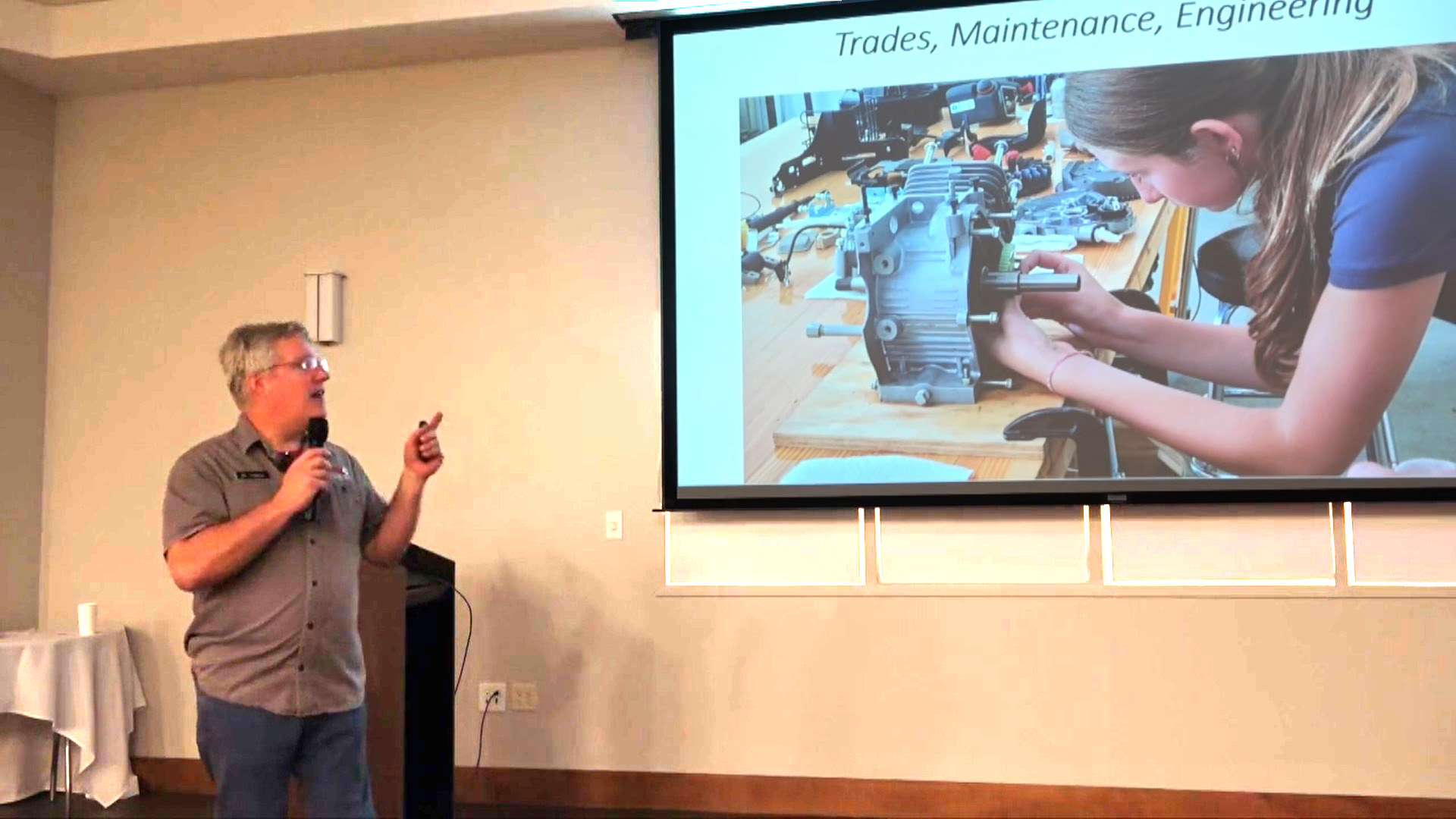
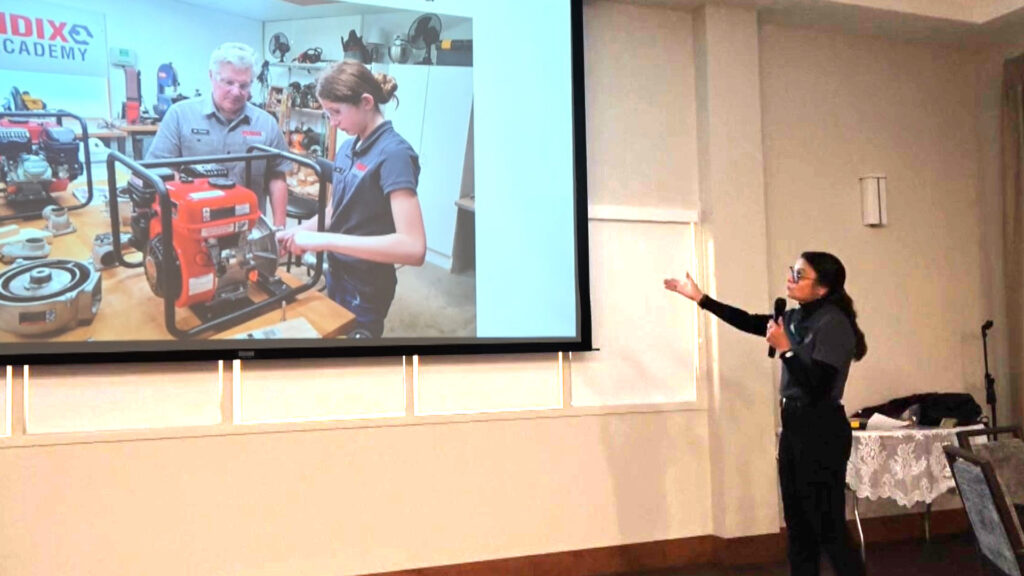
Bring the inspiring mission of Bendix Academy to your organization or group! Todd Trainor and Wendy Zielen offer engaging presentations on "Tomorrow's Toolment Today," blending stories of mentorship, mechanical skills, and community impact. Whether you’re reminiscing about shop class or exploring how to empower the next generation, their talks spark connections and inspire action. Perfect for schools, community groups, professional organizations, and more.
 

Contact us today to book your session and join the revival!

COMMUNITY CONNECTION – Roger’s lifelong use of toolmanship skills

COMMUNITY CONNECTION – Roger’s lifelong use of toolmanship skills

Roger’s Journey: A Life in Toolmanship and Mentorship

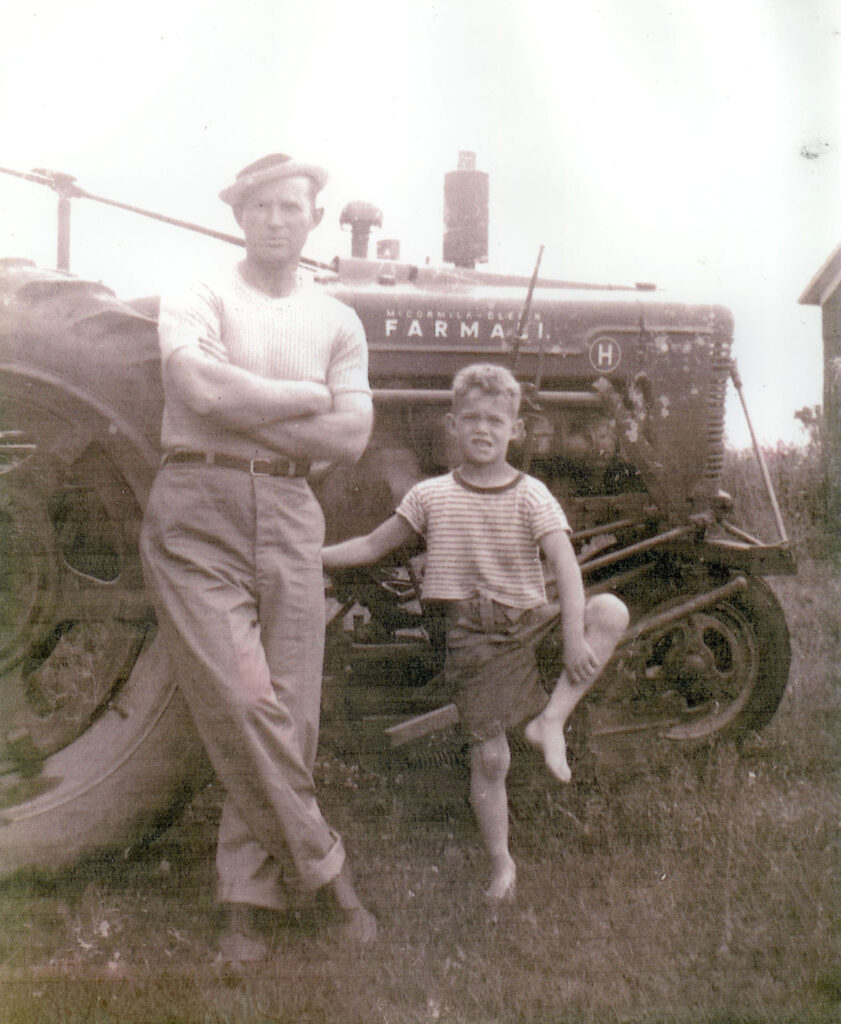
Frances Ashley and his son Roger in front of their Farmall tractor – 1940s

At Bendix Academy, we know that toolmanship is more than turning wrenches—it’s a way of thinking, solving problems, and building a life with your own two hands.

Few people embody this ethos more than Roger Ashley, a longtime supporter of Bendix Academy and a lifelong “toolman” whose career spans from small-town farming to the space race, automotive safety, and back again to the heart of restoration and mentorship.

Bendix Academy’s Executive and Development Director, Wendy Zielen, recently sat down with Roger to hear his story. What emerged was a chronicle of hard work and craftsmanship as well as a living history of American ingenuity. Roger’s journey is an intriguing and powerful reminder of why toolmanship and mentoring the next generation both matter so deeply.

Early Roots: A Farm boy’s Introduction to Mechanics

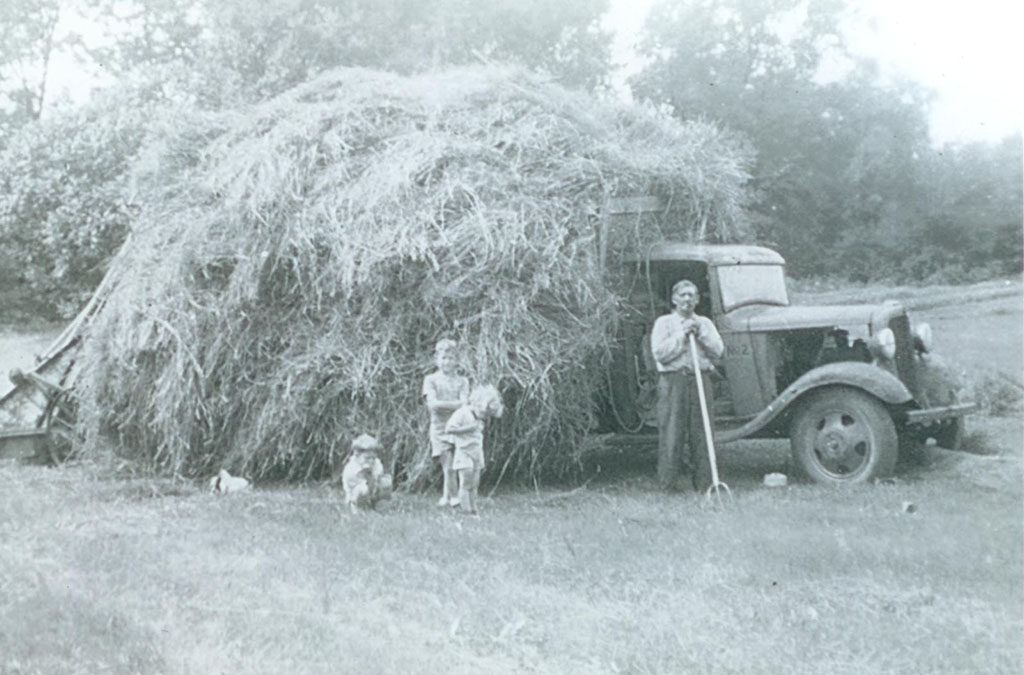
Roger grew up on a 100-acre family farm just outside Flint, Michigan, near Lake Shannon. From a young age, life revolved around hard work, responsibility, and mechanical problem-solving. His father, who worked second shift at Baldwin Rubber Company, made sure the kids started their farm chores early. “We were milking 15 cows morning and night,” Roger recalls. At first, it was by hand. Later, we had machines—but in the winter, if the electricity went out, we had to rig power using an old International truck just to keep milking going. There was no time to wait or complain—you figured it out.”

This early exposure to machines—from tractors and hay balers to makeshift generators—laid the foundation for a lifetime of toolmanship. It wasn’t just survival; it was education in real time.

Ashley kids on the farm:  Frances, Roger, Joseph, and Roy

“There were winters when snow would shut the roads down completely,” Roger recalled. “We’d have to haul the milk out to Route 23 by hand so it could be shipped. If the power went out, we’d fire up an old International truck to power the milking machines. There were too many cows to go back to milking by hand!”

Love, Land, and a Life Built by Hand

While Roger was growing up on the family farm, mastering machinery and milking cows before dawn, life wasn’t all chores and equipment. There was time for fishing in the creek out back, hunting in the woods, and playing football and baseball with school friends from Linden Schools.

Even then, toolmanship showed itself early—Roger recalls driving a 1/2-ton truck to school, not for show, but because it was the family’s way of getting things done. By the time he was a teenager, he was baling hay, planting grain and wheat, combining crops, and milking cows twice a day.

Those skills taught more than mechanical fluency—they built confidence and the ability to solve problems under pressure.

It’s this type of thinking—resourceful, resilient, and mechanically creative—that would shape every chapter of Roger’s life.

It was during those high school years that Roger met Mary, the girl who would become his wife, partner, and lifelong teammate. They met in 10th grade, fell in love, and married in 1959—ready to build a life together in every sense of the word.

Roger and Mary

A growing family demanded a growing house, built from the foundation up by Roger!

The newlyweds bought an acre of land, and Roger rolled up his sleeves. He built the foundation himself, moved a small house onto it, and over the years added room after room as their family grew. The skills Roger used to build his home weren’t learned in a classroom—they were forged from long hours on the McGuire Road farm.

“I did everything except install the first furnace,” Roger said.

With six children, three girls and three boys, there was plenty of need for space, and he made it happen the same way he always had: with his own hands, a clear head, and a lot of grit.

From the Family Farm to a Career in Motion…

Not long after getting married, Roger landed a job at the Ford dealership in Fenton. His deep knowledge of parts and systems—honed through necessity on the farm—set him apart.

“I didn’t think of it as a trade at the time,” he said. “But I knew what parts were, what they did, and how they worked together. That mattered.”

Roger’s success in Fenton led to a parts manager role at a Ford dealership in Flint, where he spent another six years gaining both technical and professional experience. With a growing family, a house he had built himself, and a rising career, Roger’s life was proof that practical skills could lay the foundation for financial stability and personal fulfillment.

…and Farm Tractors to Lunar Rovers!

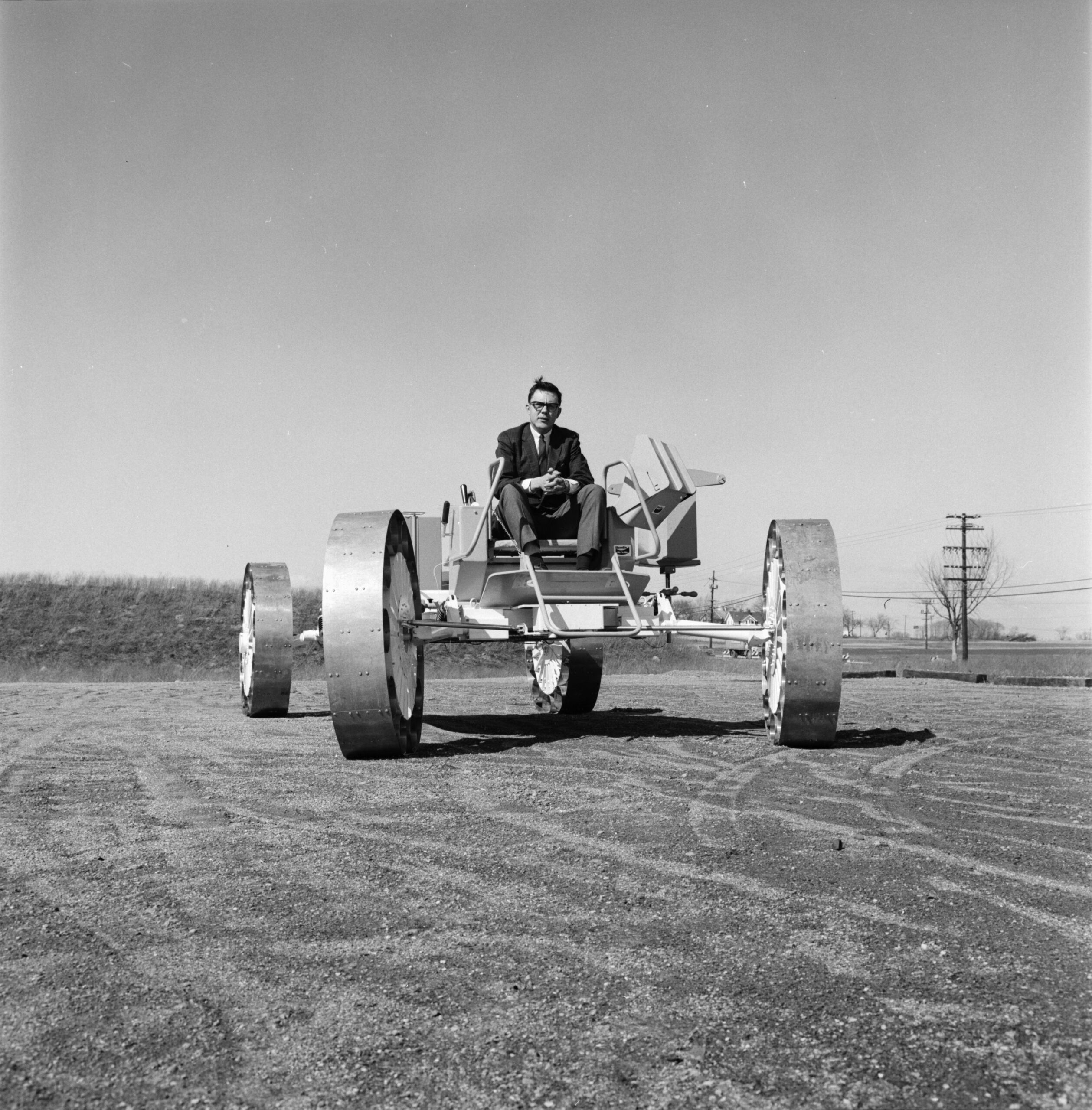
Then came the opportunity that tied everything together: a position at Bendix Aerospace in Ann Arbor, helping track materials and parts for the Lunar Rover. It was a dream job, made possible not by degrees or test scores, but by Roger’s lived expertise in toolmanship.

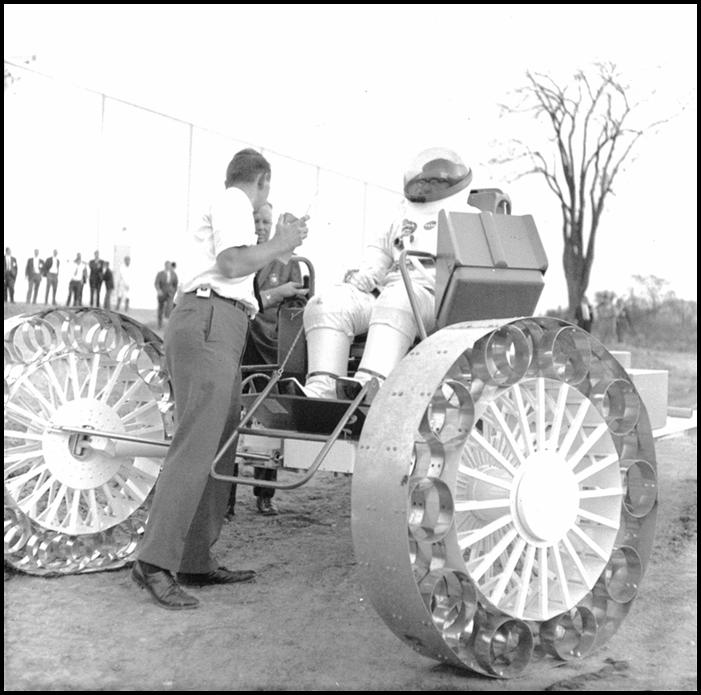
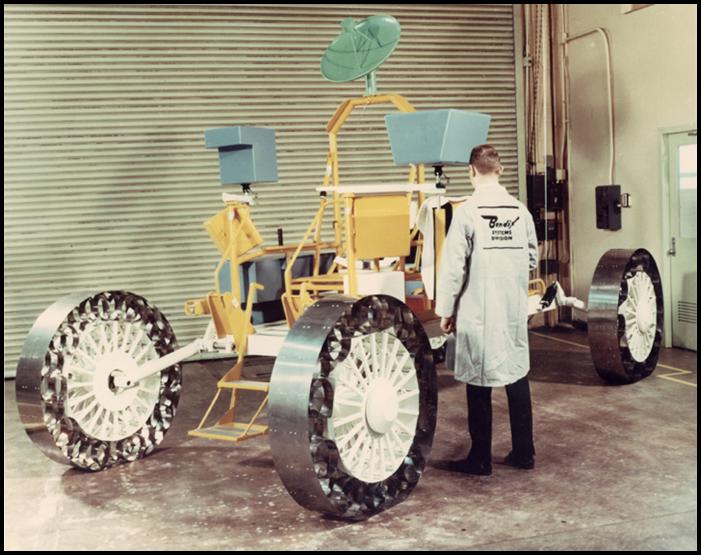
In the 1960s, Roger joined the Bendix team tracking parts and materials for one of the most ambitious undertakings of the century: the Lunar Rover, or “Moon Buggy,” built for the Apollo missions.

“I was just a farm kid who liked machines,” Roger said. “Next thing I knew, I was helping track down the parts for a vehicle headed to the moon.”

Working at Bendix Aerospace – Roger in a space suit!

Bendix Aerospace Lunar Rover in test phase

This experience not only deepened Roger’s technical knowledge but gave him a sense of pride and purpose—proof that the mechanical skills he honed in his youth had real, global impact.

General Motors Safety Lab 1996-99

Automotive Safety and the General Motors Proving Grounds

After Bendix, Roger took a position at the GM Proving Grounds, where he spent the rest of his career. He worked in the safety testing lab, witnessing the evolution of crash test technology firsthand.

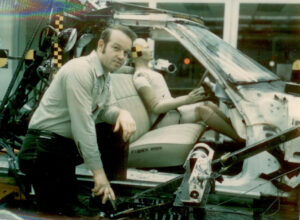
“Even with seatbelts on, dummies would go forward six inches in a crash. That taught me to always wear mine,” Roger said.

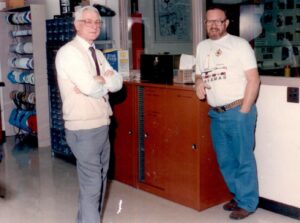
Roger witnessing first hand the evolution of crash test technology

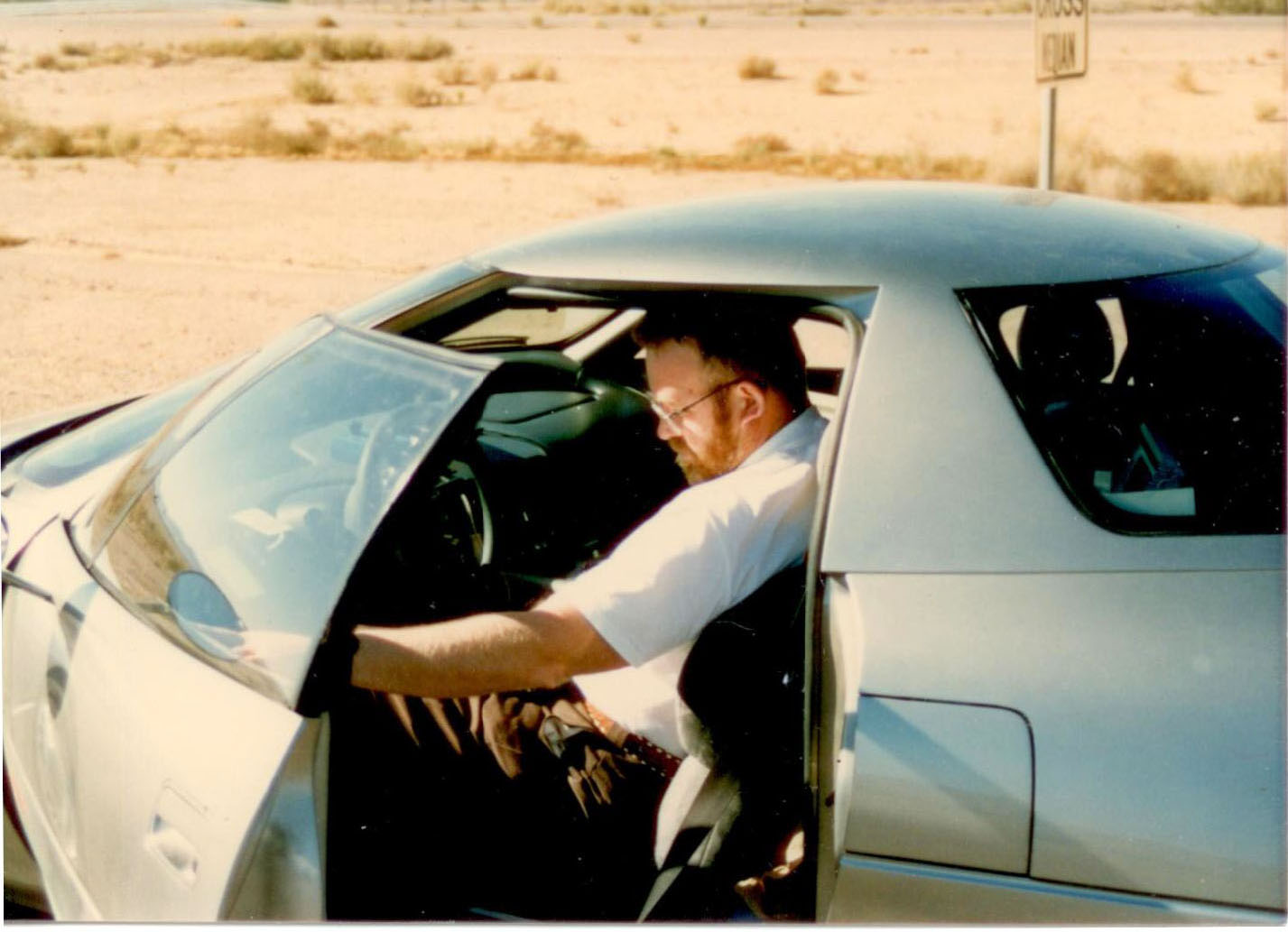
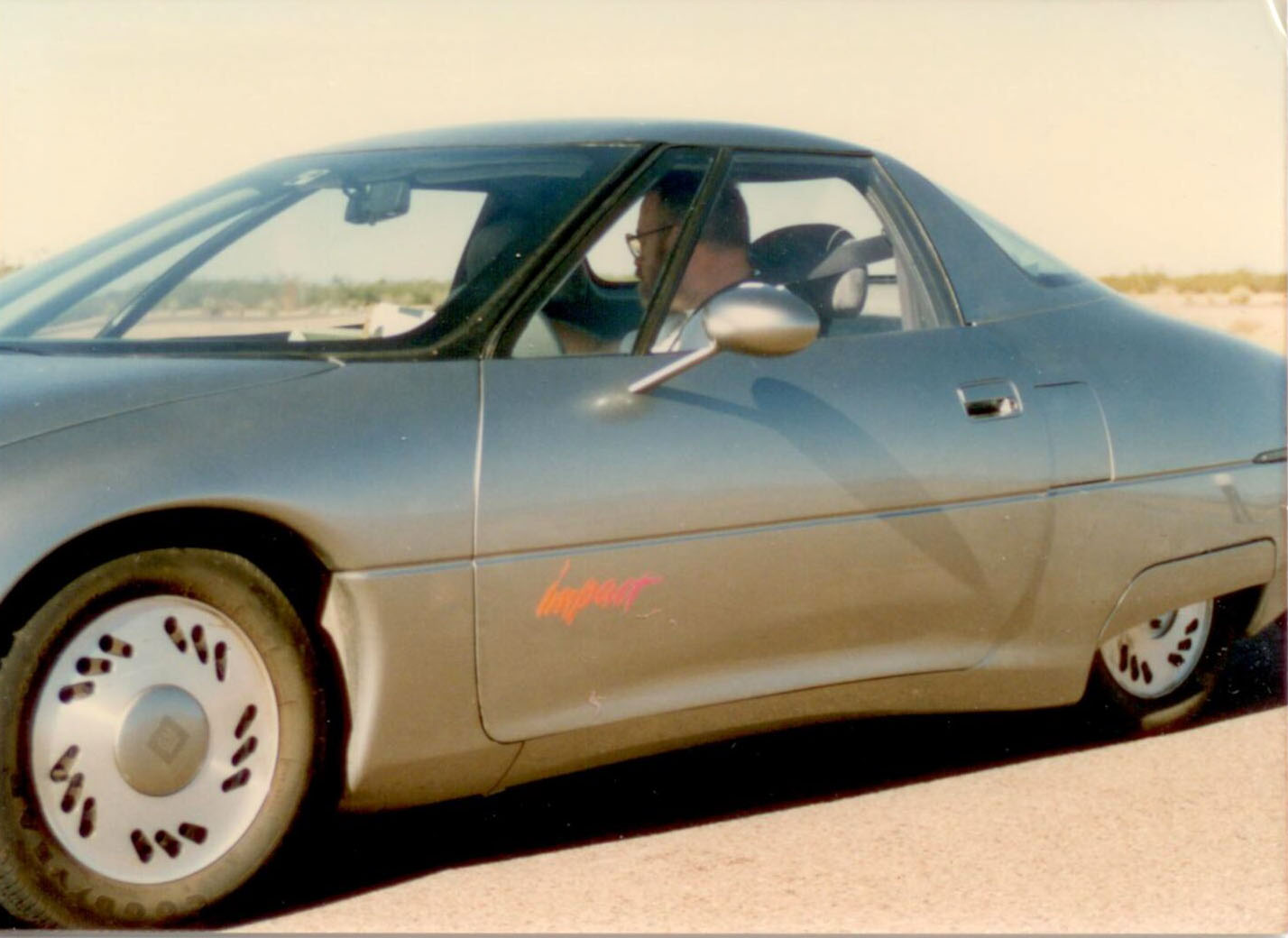
Later, he moved into emissions testing, where he monitored vehicle performance under rigorous conditions. One incident he recalls vividly: a crash involving a test driver in a Corvette that delayed the release of the 1984 model by months. Roger also worked on early electric vehicle prototypes and vehicle handling tests, where the thrill of speed met the science of control.

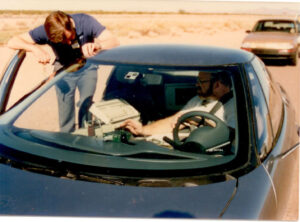
Above: Roger working on emissions testing and early electric vehicle prototypes

“The 454 four-wheel-drive trucks could outperform some sports cars,” Roger laughed. “They rode better, too.”

Retirement Projects, Buried Treasures, and a Brotherly Bond

Roger may have officially retired from General Motors in 1999, but he never stopped working with his hands. Retirement simply meant he could return to his roots—mechanical restoration, farm life, and family history—at his own pace and on his own terms.

With the same energy and curiosity he brought to the proving grounds and emissions labs, Roger turned his attention to a new kind of project: restoring vintage Farmall tractors from the 1940s and 1950s, many of which had been sitting idle—some for decades—one the old family farm!

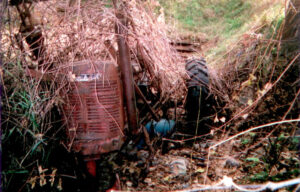
One project stands out. Deep in the fields where he had once planted hay and milked cows as a boy, Roger and his brother Roy unearthed a tractor that had been buried for more than 40 years. Rusted, weathered, and nearly forgotten, the machine was little more than a shell. But to Roger, it was a challenge—and a piece of family history worth saving.

“It wasn’t just about fixing the tractor,” Roger shared. “It was about bringing something back to life that had been part of our story.”

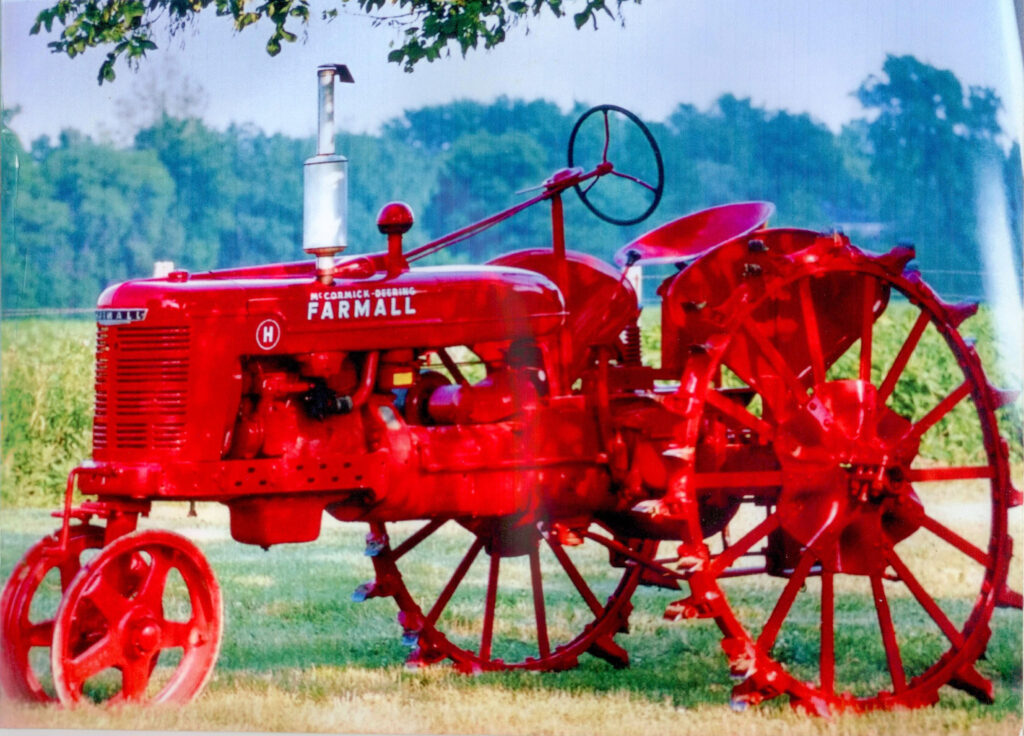
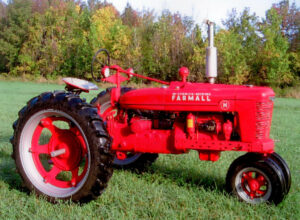
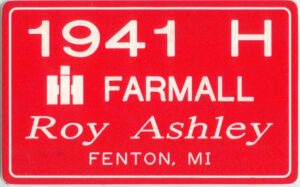
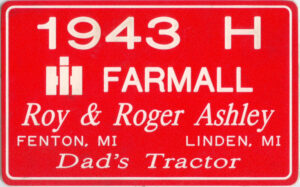
Roger painstakingly reconstructed the machine, using parts from other tractors he sourced or salvaged. He knew every nut, bolt, and bearing—and if he didn’t, he figured it out. Over time, that tractor became one of eight Farmall Hs Roger would restore, each one a tribute to mechanical ingenuity and the resilience of old machines—and the men who knew how to breathe life back into them.

His brother Roy, who had also inherited a deep love of machinery, shared in the joy of these projects. The two of them spent countless hours together in the shop and in the field, tinkering, troubleshooting, and triumphing, just as they had as boys. It was more than a hobby—it was a way to reconnect, not only with each other, but with the land and tools that had shaped them both.

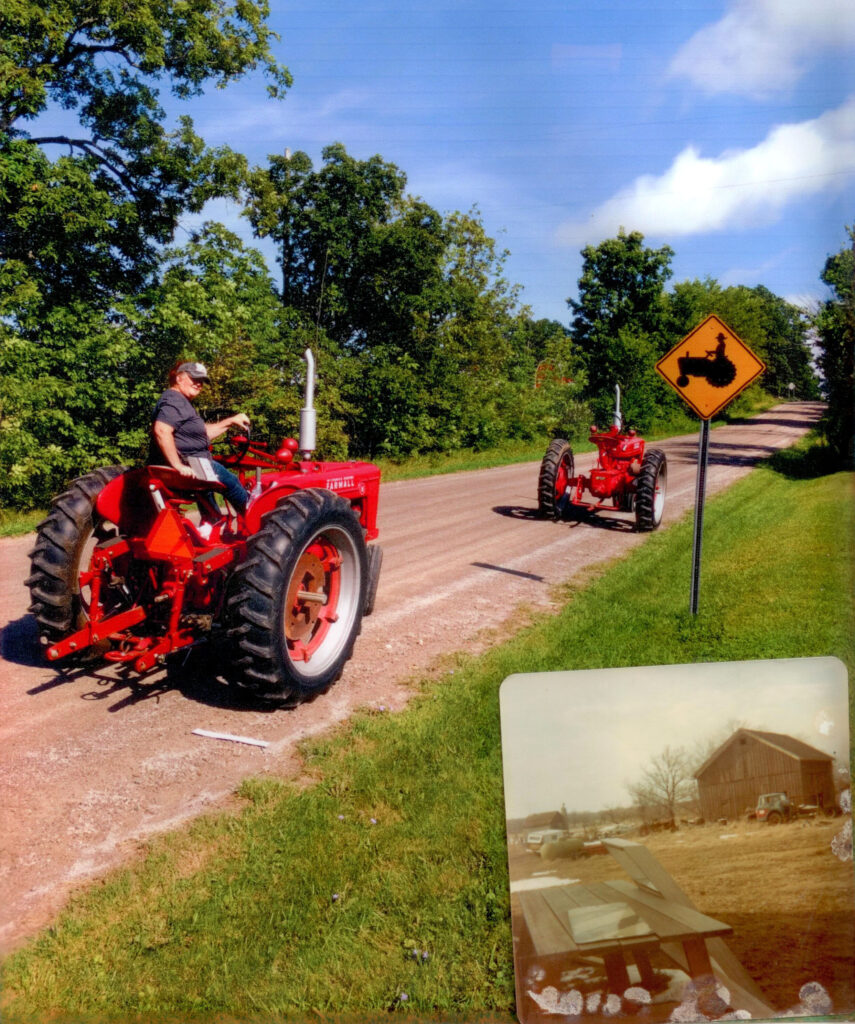
Roger didn’t just fix tractors—he drove them to local shows, proudly showcasing the craftsmanship of a bygone era. Never on trailers, always on back roads—he avoided numbered state routes entirely.

“If you’re going to restore it, you ought to drive it,” Roger says with a grin.

Eventually, Roger joined a tractor club, where he found a community of like-minded enthusiasts. They shared techniques, swapped parts, and swapped stories. But over time, he noticed club membership beginning to dwindle. Many members aged out or passed on, and with them, decades of mechanical knowledge risked being lost.

This decline only deepened Roger’s commitment to mentoring and passing on what he knew. It was what first drew him to Bendix Academy—and it’s what keeps him involved to this day.

Tractor buried for 40 years on farm

Restored tractor awaiting new tires

Tractor completely restored!

Then and Now on the same farm road!

Above: Roger & Roy tractor time on Mackinaw Bridge
Below: Commemorative plaques for the brothers’ prized projects

From Bendix Aerospace to Bendix Academy

In 2015, Roger and two friends spotted a flyer about an effort to restore a B-25 bomber engine as part of the Warbirds of Glory Museum where a static model of the R-2800 engine was being rebuilt. Roger remains involved with the Sandbar Mitchell project, and also followed Todd Trainor’s mission when he founded Bendix Academy to focus on toolmanship mentoring. Roger felt immediately at home.

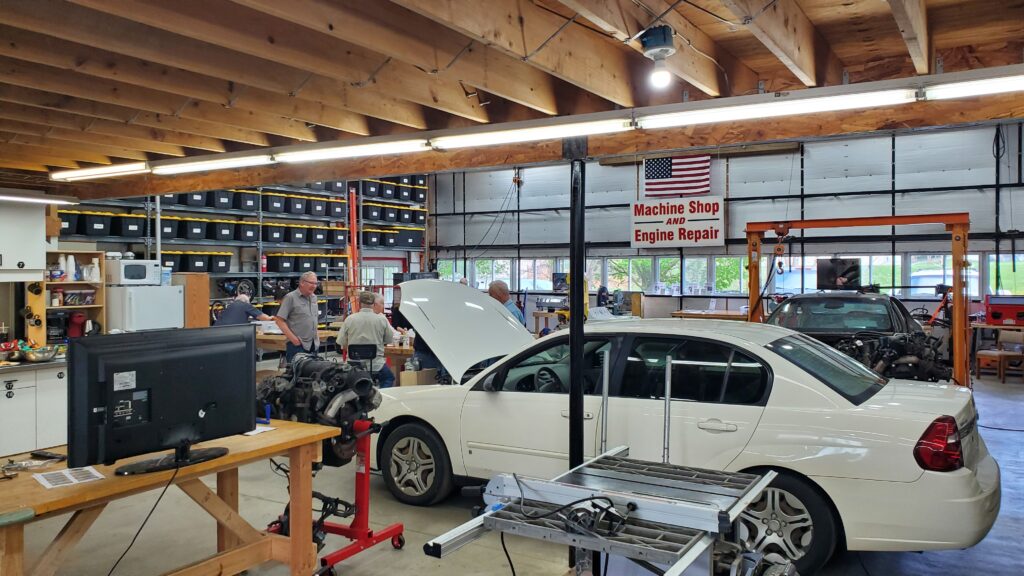
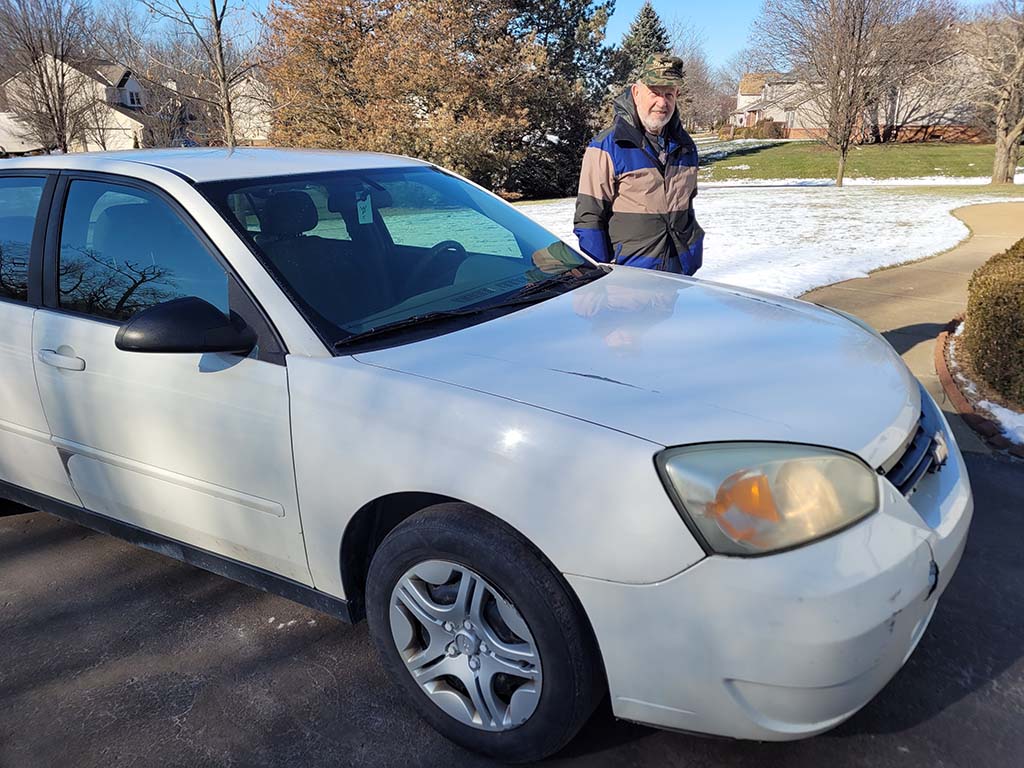
Since then, Roger has remained a devoted supporter of the Academy. Most recently, he donated a white Chevy Malibu to be used in the Academy’s automotive maintenance pathway—one of the most popular modules among students.

“The camaraderie reminded me of working on the farm, or the proving grounds,” Roger said. “You’re solving problems together, learning from each other.”

Above: Roger’s Malibu, donated for automotive maintenance lessons, on display during Bendix Academy Spring 2025 Open House

Roger’s passion for mentoring is personal. When one of his grandsons had the chance to work at Discount Tire, the job required knowing how to use an air wrench. Roger took the time to teach him—and that single lesson helped his grandson land the job and begin a steady climb upward.

Where can you find Roger today? 

Roger continues to enjoy toolmanship and tinkering, along with other fulfilling pursuits such as maple sugaring. Soft spoken but with obvious fortitude behind his quiet demeanor, Roger enjoys sharing his wealth of experience with others who are interested.

“Too many young people haven’t had the chance to use tools, to take things apart and fix them,” Roger says. “Phones and computers are great, but knowing how to do basic repairs and understand machines saves money, builds confidence, and gives you independence.”

Roger’s Advice to Students: Stay Curious, Stay Hands-On

When asked what advice he’d give to Bendix Academy students today, Roger doesn’t hesitate.

“Take advantage of every opportunity to work with your hands. Ask questions. Try things. And don’t be afraid to fail—that’s how you learn. I didn’t set out to work on space rovers or test Corvettes. I just kept learning. And when the opportunity came, I was ready.”

Toolmanship as a Legacy

Roger Ashley’s journey is more than a story of one man’s career—it’s a blueprint for how mechanical skills shape lives, families, communities, and even space exploration. At Bendix Academy, we value the generational knowledge of those with experience, and we believe that every young person deserves the chance to discover how they too can build, fix, and master. As long as we have role models like Roger in our midst, the legacy of toolmanship continues!

Bendix Academy thanks Roger Ashley for sharing his wealth of wisdom with our community!

Roger as he donated his meticulously cared-for Malibu to Bendix Academy for students to learn auto maintenance.

Mentors Matter! Make a Difference in Building the Future

Do you have toolmanship skills, and a desire to share them? At Bendix Academy, we believe hands-on toolmanship knowledge can change lives. As our program continues to grow, we’re seeking mentors who are passionate about restoring mechanical self-reliance in the next generation.

Whether you’re a seasoned tradesperson, engineer, dedicated DIYer, or simply someone who enjoys teaching and giving back, your experience can make a lasting impact. Our mentors guide students through real projects that build confidence, critical thinking, and the ability to solve problems with their own hands.

If you’re ready to make a difference—one tool, one lesson, one student at a time—we’d love to hear from you.

Interested in mentoring? We invite you to consider becoming a Bendix Academy Mentor!  Questions? Please contact us at toolmen@bendixacademy.org


Read more articles like this in the most recent edition of Toolman Tips, Bendix Academy's quarterly newsletter!

Book Bendix Academy for Your Next Event

Bring the inspiring mission of Bendix Academy to your organization or group! Todd Trainor and Wendy Zielen offer engaging presentations on "Tomorrow's Toolment Today," blending stories of mentorship, mechanical skills, and community impact. Whether you’re reminiscing about shop class or exploring how to empower the next generation, their talks spark connections and inspire action. Perfect for schools, community groups, professional organizations, and more.

 

Contact us today to book your session and join the revival!

MENTORS’ MEASURE – Jude Louria’s Journey through Tools, Teaching, and Takeoff

MENTORS’ MEASURE – Jude Louria’s Journey through Tools, Teaching, and Takeoff

As one of Bendix Academy’s most recent mentors, Jude Louria already embodies what Bendix Academy is all about: curiosity, craftsmanship, and the drive to build and understand how things work—from puzzle tables to airplanes.

Jude’s journey from flashlight-holding kid to flight instructor and dedicated mentor is a powerful reminder of what hands-on learning and mentorship can ignite.

“Every time we moved, the house had something different that needed fixing. I learned to rip up carpet, rebuild a deck, troubleshoot door frames—each house was like a new hands-on classroom.”

DIY Roots: A Childhood Built With Tools and Curiosity

Jude’s early education came from more than from textbooks—it came from tools, projects, and the kind of home where there was always something to explore through hands-on experiences.

Raised in a thrifty, do-it-yourself household, Jude learned early that problem-solving starts with your own two hands. “DIY wasn’t a trend for us,” he says. “It was a way of life.”

Like many Bendix mentors, Jude grew up learning alongside his dad, holding the flashlight during repairs, watching closely, and eventually picking up the tools himself. “My dad figured things out the hard way—from his dad, from coworkers, from trial and error. That rubbed off on me.” Their projects were big and small, sometimes tackling things like refinishing hardwood floors made from old bowling lanes, or fixing misaligned doors in a newly built home. Each move brought new repairs—and new opportunities to learn.

One of the most memorable early projects? A custom shoe rack. “We spent weeks sanding and shaping it,” Jude recalls. “It turned out beautifully—too perfectly, actually. It was so snug in its spot we had to leave it behind when we moved.” That experience taught him pride in craftsmanship, and the bittersweet truth that sometimes the best work isn’t portable.

Turning Wrenches and Turning Heads

By high school, Jude’s focus shifted to cars. He began collecting service manuals for the vehicles he dreamed of owning and immersed himself in the logic of automotive repair. Diagnosing mysterious engine symptoms—like overheating, loss of power, or not moving forward (cracked cylinder header and sticky transmission) in a beloved Jeep Wrangler became a favorite challenge. He got especially good at:

  • Diagnosing quirks in aging vehicles 
  • Using logic to walk through each repair step methodically
  • Saving money while building mechanical confidence

With growing confidence and mechanical insight, he designed and built a custom puzzle table—a project that married utility with clever design. Lightweight, resizable, and budget-friendly, the table uses friction-fit legs to stay sturdy and adaptable. “I puzzled it out,” he says, grinning. “That project was pure problem-solving—from concept to completion.”

One of the most important lessons Jude learned was beyond the subject material:  He was interested in what made the learning process work, too.


“I liked the process—step-by-step, you check this, then that, then the next thing. Eventually, you fix it. It’s like solving a riddle you can drive.”

Charting a Course Skyward

“There’s a beautiful overlap between teaching toolmanship and flight instruction,” Jude says.  “Both require clear thinking, patience, and the ability to explain complex things in simple ways.”

Jude’s mechanical mindset and love of systems eventually pointed him upward—into the world of aviation. He earned his private pilot license and became both a certified flight instructor and a CFII (Instructor of Certified Flight Instructors), with additional certification underway in Airframe and Powerplant (A&P) mechanics.

In fact, teaching has become one of the most rewarding aspects of his aviation journey. “Pilots have to break things down like they’re teaching a kindergartner,” he explains. “It’s not about making things basic—it’s about making them make sense.” That clarity is something he brings to his role as a Bendix mentor as well.

The Joy of Mentorship—and the Moment It Clicks

Whether in the cockpit or the workshop, Jude finds deep satisfaction in watching students have their “ah-ha” moments. 

“You can see it in their eyes. When something clicks, when they realize they can do it themselves—it’s incredible.”

He particularly enjoys mentoring students who come in a bit overconfident. “Those are the fun ones,” he laughs. “They think they know it all—until they realize they don’t. That moment of humility? That’s where the real growth starts.”

“Sometimes the most valuable lessons come when something goes wrong,” Jude adds. “That’s when confidence is built—when students figure out how to recover, reassess, and keep going.”

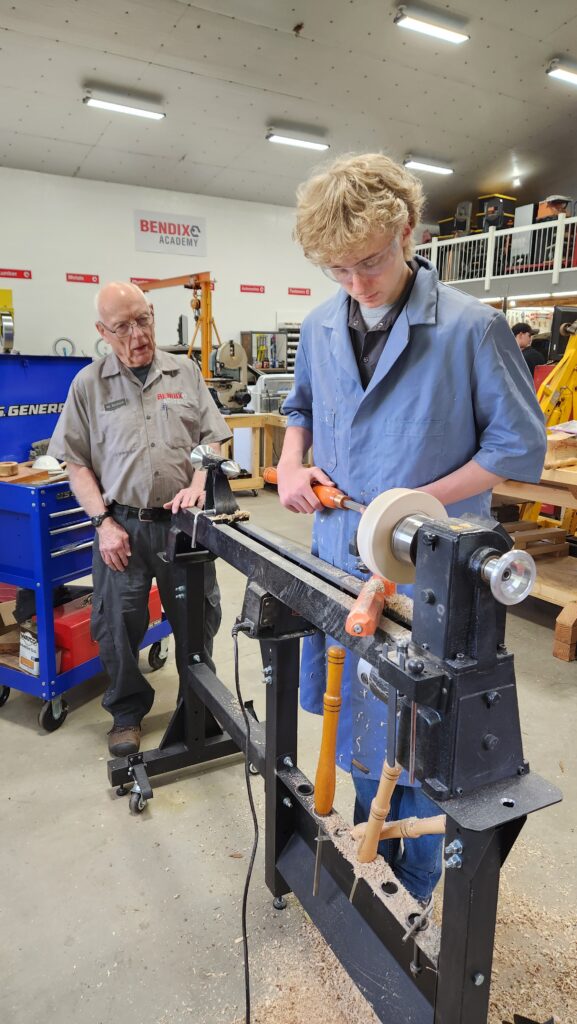
Above: Jude teaching essential toolmanship skills such as hammering and sawing


Learning to Mentor from How Others Mentor

Just as Jude guides others, he continues to learn from seasoned mentors around him.

Whether it’s professors in Eastern Michigan University’s Aviation Technology program or long-time pros at Home Depot, he pays close attention to not only the lessons being taught but also how people teach.

Jude pays close attention to the teaching styles of his professors to refine his own. “Each one had their own method—some very structured, some more relaxed—but I watched how they shaped lessons and guided people through the hard parts. That made me a better student and a better mentor.”

Recently, Jude took a short break from coursework to focus fully on this next chapter: entering the aviation industry as a professional instructor.

In doing so, he’s deepening both his technical expertise and his skills as a mentor.

“I learned so much from older mentors—guys who’ve done this for decades,” Jude says.

“Every project, every conversation adds to the toolkit I’ll use to build my own pole barn, hangar, maybe even a house someday.”

Bendix Spirit in Action

Jude’s story reflects everything Bendix Academy stands for:

  • Practical knowledge,
  • Creative thinking, and the
  • Transformative power of mentorship.

From flashlight-holding helper to certified pilot, from puzzling out a table to guiding students through their own problem-solving process, Jude is not just building things—he’s building capability and confidence, one student at a time.

“That’s the spirit of Bendix Academy, and I’m proud to be part of it!”


Mentors Matter! Make a Difference in Building the Future

Do you have toolmanship skills, and a desire to share them? At Bendix Academy, we believe hands-on toolmanship knowledge can change lives. As our program continues to grow, we’re seeking mentors who are passionate about restoring mechanical self-reliance in the next generation.

Whether you’re a seasoned tradesperson, engineer, dedicated DIYer, or simply someone who enjoys teaching and giving back, your experience can make a lasting impact. Our mentors guide students through real projects that build confidence, critical thinking, and the ability to solve problems with their own hands.

If you’re ready to make a difference—one tool, one lesson, one student at a time—we’d love to hear from you.

Interested in mentoring? We invite you to consider becoming a Bendix Academy Mentor!  Questions? Please contact us at toolmen@bendixacademy.org


Read more articles like this in the most recent edition of Toolman Tips, Bendix Academy's quarterly newsletter!

Book Bendix Academy for Your Next Event

Bring the inspiring mission of Bendix Academy to your organization or group! Todd Trainor and Wendy Zielen offer engaging presentations on "Tomorrow's Toolment Today," blending stories of mentorship, mechanical skills, and community impact. Whether you’re reminiscing about shop class or exploring how to empower the next generation, their talks spark connections and inspire action. Perfect for schools, community groups, professional organizations, and more.

 

Contact us today to book your session and join the revival!

FOUNDER’S FORUM – Restoring Mechanical Self-Reliance

FOUNDER’S FORUM – Restoring Mechanical Self-Reliance

Todd Trainor, Founder, Bendix Academy
By Todd Trainor, Founder and Program Director of Bendix Academy

There was a time—not long ago—when mechanical self-reliance was a defining trait of the American household.

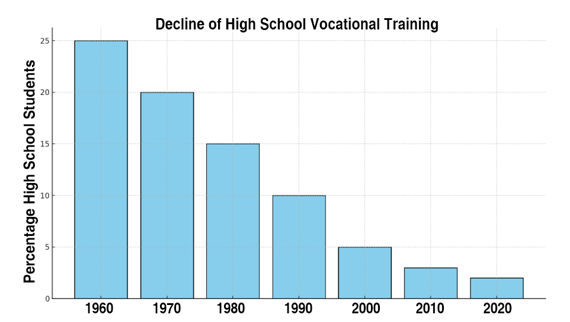
Whether it was patching a roof, fixing a bicycle, or diagnosing a broken engine, people once carried a quiet confidence in their ability to solve practical problems with their own two hands. But somewhere along the way, that foundational skill began to slip away.

Today, we live in a culture that is increasingly dependent on specialists and disposable solutions.


The need for Mechanical Self-Reliance

Many young people are growing up without even the most basic skills in tool use, repair, or mechanical reasoning. A 2021 study by Stanley Black & Decker found that 60% of young adults aged 18–24 feel “overwhelmed” when something in their home breaks, and fewer than 30% feel confident using common hand tools.

That’s more than inconvenient, it’s a warning sign.

How we define TOOLMANSHIP:

Toolmanship is the art and skill of using tools and being mechanically self-reliant.

At Bendix Academy, we are responding to that warning by restoring mechanical self-reliance as a cornerstone of independence, confidence, and character. Through our Toolmanship Mentoring program, students are taught by mentors who themselves are living examples of mechanical self-reliance. These are individuals with deep experience, practical wisdom, and a desire to give back. It’s not just what they know, it’s how they teach: with patience, precision, storytelling, and care.

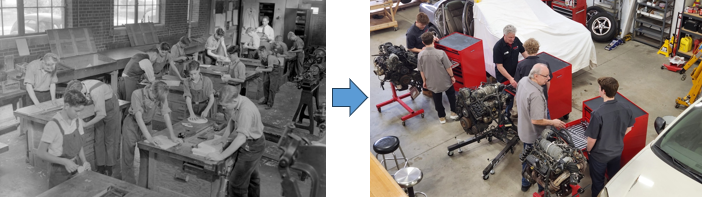
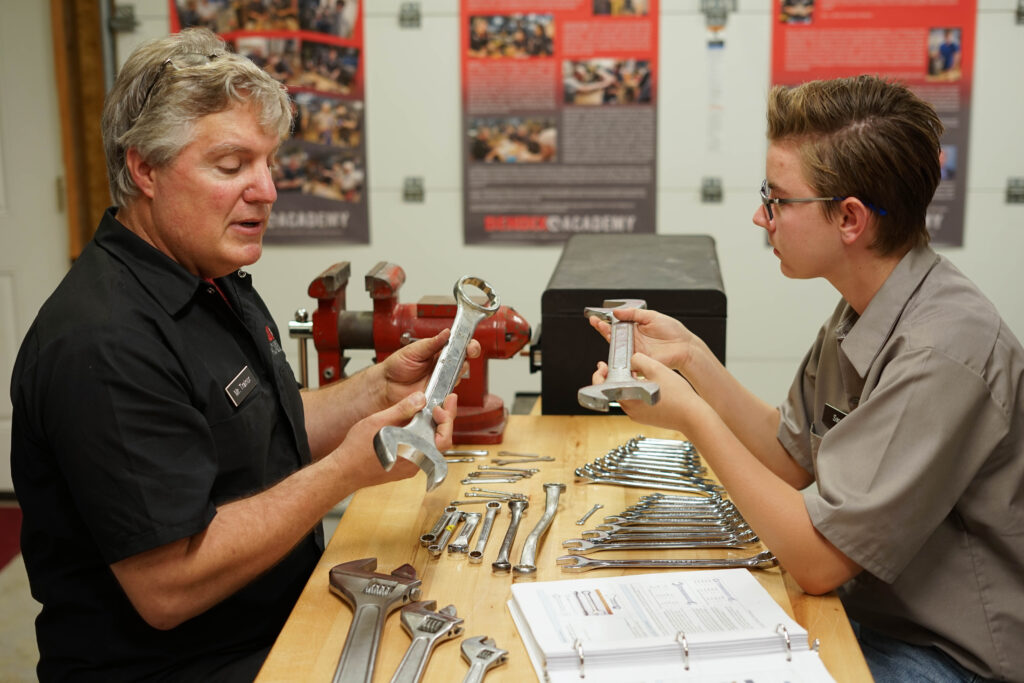
Above: From shop class to hands-on learning, we need a Toolmanship Revival

“People once carried a quiet confidence in their ability to solve practical problems with their own two hands. But somewhere along the way, that foundational skill began to slip away.”

~Todd Trainor, Founder, Bendix Academy

We define toolmanship as the art and skill of using tools and being mechanically self-reliant. And our mentoring program is intentionally designed to nurture mechanical self-reliance in every student. This is not a lecture series or a vocational track—it’s hands-on learning rooted in real relationships. We pair students with mentors across generations, guiding them through a structured sequence of mechanical challenges building:

  • confidence,
  • skill,
  • and critical thinking.​

Make no mistake: This is about more than tools!

Mechanical self-reliance is a mindset. It’s the ability to assess, understand, and act when something breaks, wears out, or needs to be improved. It builds discipline and perseverance. It helps young people become resourceful, grounded, and dependable. And most importantly, it positions them to help others.

One of the strongest values we uphold is this: Use your mechanical skills in service to your community. When our students learn to fix a neighbor’s snowblower, patch a friend’s fence, or volunteer to build a ramp for an elderly neighbor, they’re not just showing competence—they’re showing character. That’s the kind of citizen we aim to cultivate.

We believe in restoring mechanical self-reliance to all young people, and at Bendix Academy, we are doing just that.

This restoration won’t come from a screen, a shortcut, or a service call. It will come from mentors and students working side by side—with tools in hand and purpose in heart. 

We know we’re only scratching the surface and that the waiting list for our Toolmanship Mentoring program is long. There is an urgent need to expand this program into many more communities—to give more young people access to the relationships, skills, and purpose that mechanical self-reliance can unlock. We are working every day toward that vision.


We look forward to the day when once again, mechanical self-reliance becomes not the exception, but the expectation.

We invite others, YOU, to join us in restoring the balance!

Read more articles like this in the most recent edition of Toolman Tips, Bendix Academy's quarterly newsletter!

Book Bendix Academy for Your Next Event

Bring the inspiring mission of Bendix Academy to your organization or group! Todd Trainor and Wendy Zielen offer engaging presentations on "Tomorrow's Toolment Today," blending stories of mentorship, mechanical skills, and community impact. Whether you’re reminiscing about shop class or exploring how to empower the next generation, their talks spark connections and inspire action. Perfect for schools, community groups, professional organizations, and more.
 

Contact us today to book your session and join the revival!

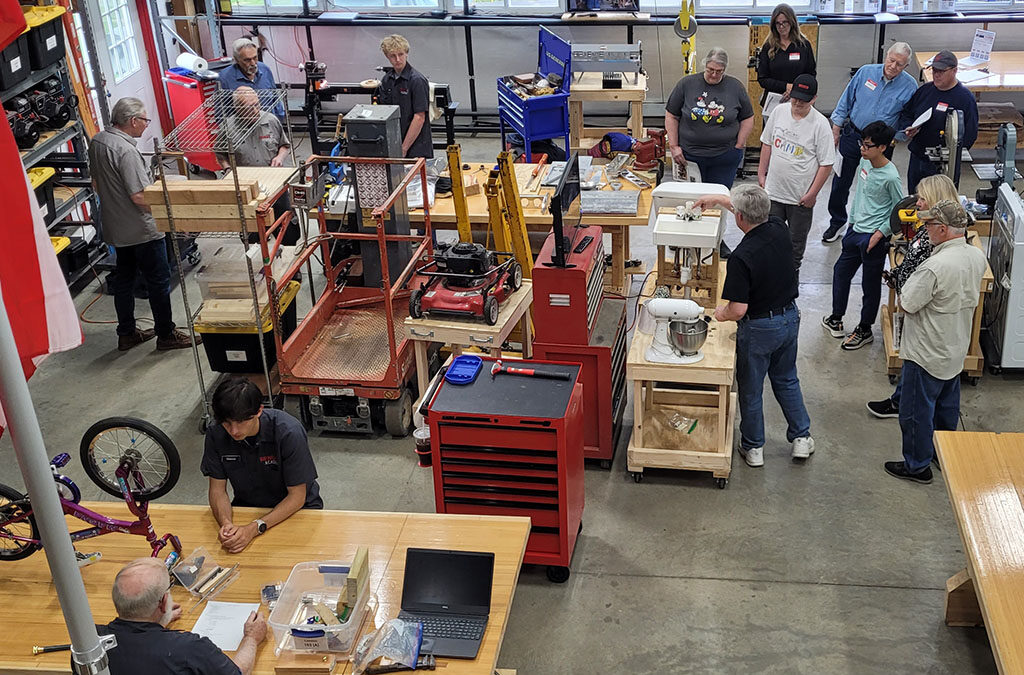
EVENTS – Bendix Academy Spring 2025 Open House a Big Success!

EVENTS – Bendix Academy Spring 2025 Open House a Big Success!

Thank you to all who attended
🔧 Spring 2025 OPEN HOUSE! 🔧

Your presence helped make those two days truly meaningful! Whether you came to learn about our mission, reconnect with mentors and friends, or simply explore the Bendix workshop, we’re so glad you were part of it.

We welcomed a dynamic mix of families, educators, tradespeople, community leaders, and first-time visitors. You asked great questions, shared powerful stories, and offered thoughtful ideas that we’re actively working to implement. Most importantly, you saw what’s possible when young people are given the tools, mentorship, and confidence to thrive.

Special thanks go to our incredible mentors, board members, and volunteers who made the event possible—and to our generous donors and supporters who keep our Toolmanship Mentoring Program running strong. This summer, our team is working hard to reduce waitlist time, grow our mentor base, and get ready for an exciting Fall 2025 season.

If you missed the Open House—or want to visit again—we’d love to host you for a tour or hands-on session. And let us know here if you’d like to be the first to know when our Fall 2025 Open House date is announced to get on the list.

Together, we’re restoring mechanical self-reliance—one student at a time! Enjoy the gallery of photos from the Open House below.

With gratitude,
The Bendix Academy Team

If you missed our May Open House, Bendix Academy invites you to schedule a time to stop by for a tour to see how we’re inspiring the next generation of toolmen. A picture may be worth a thousand words, but a visit will give you a true understanding!

Read more articles like this in the most recent edition of Toolman Tips, Bendix Academy's quarterly newsletter!

Book Bendix Academy for Your Next Event

Bring the inspiring mission of Bendix Academy to your organization or group! Todd Trainor and Wendy Zielen offer engaging presentations on "Tomorrow's Toolment Today," blending stories of mentorship, mechanical skills, and community impact. Whether you’re reminiscing about shop class or exploring how to empower the next generation, their talks spark connections and inspire action. Perfect for schools, community groups, professional organizations, and more.
 

Contact us today to book your session and join the revival!

TOOLMAN TIPS – Cabinet Doors

TOOLMAN TIPS – Cabinet Doors

Cabinet Door Conundrum: Fixing that frustrating hinge alignment

Ever faced a problem at home that seemed minor but frustrating?

Toolman Tips is here to share simple, practical solutions like this—   fixes anyone with basic toolmanship skills can handle.

At Bendix Academy, we teach students to approach problems with confidence and mechanical know-how. Scroll below for this quarter’s Toolman Tip!

You walk into your kitchen and there it is again: that one cabinet door that’s crooked, sagging, or bumping into its neighbor. It still opens and closes, but something feels… off. Most people live with it. But anyone with basic mechanical self-reliance knows: this is a problem you can fix.

Cabinet door alignment issues are one of the most common annoyances in the home—and one of the easiest to fix if you know what to look for.

Older-style cabinet hinges, sometimes called “surface-mounted” or “butt hinges,” are often visible from the outside and offer little to no adjustment once installed. But most modern cabinets use European-style concealed hinges, which are mounted inside the cabinet and designed to be easily adjustable. These clever mechanisms allow fine-tuning in three directions: up/down, left/right, and in/out (depth). That’s right—no need to remove and reinstall the entire hinge. Just a screwdriver and some patience can restore a perfect fit.

This is exactly the kind of fix our Toolmanship Mentoring students learn to approach with calm logic and skill. We don’t just teach how to use tools—we teach how to observe, assess, and adjust. When a student learns to correct a misaligned cabinet door, they’re gaining more than a functional cabinet—they’re gaining confidence and control over their environment.

And it’s that mindset that defines mechanical self-reliance.

Step-by-Step: How to Adjust a Cabinet Door

Before you begin:

Open the cabinet door and locate the concealed hinges inside. Most modern adjustable hinges have two screws per hinge—one for movement, one for mounting. Some may have a third screw for depth.

Start by collecting the tools you'll need
  • Phillips screwdriver
  • Small flashlight (optional)
  • Patience and a good eye for alignment
1. Diagnose the Problem

Is the door too high or low? Too far left or right? Tilted? Sticking out too far or recessed too deep?

2. Adjust Left/Right (Side-to-Side)


Locate the side adjustment screw (usually the screw closer to the cabinet face). Turn clockwise to move the door closer to the hinge side, counterclockwise to move it away.

3. Adjust Up/Down (Height)

Loosen the mounting screws (usually on the vertical plate attached to the cabinet wall). Gently shift the door up or down as needed, then tighten to secure.
4. Adjust In/Out (Depth)

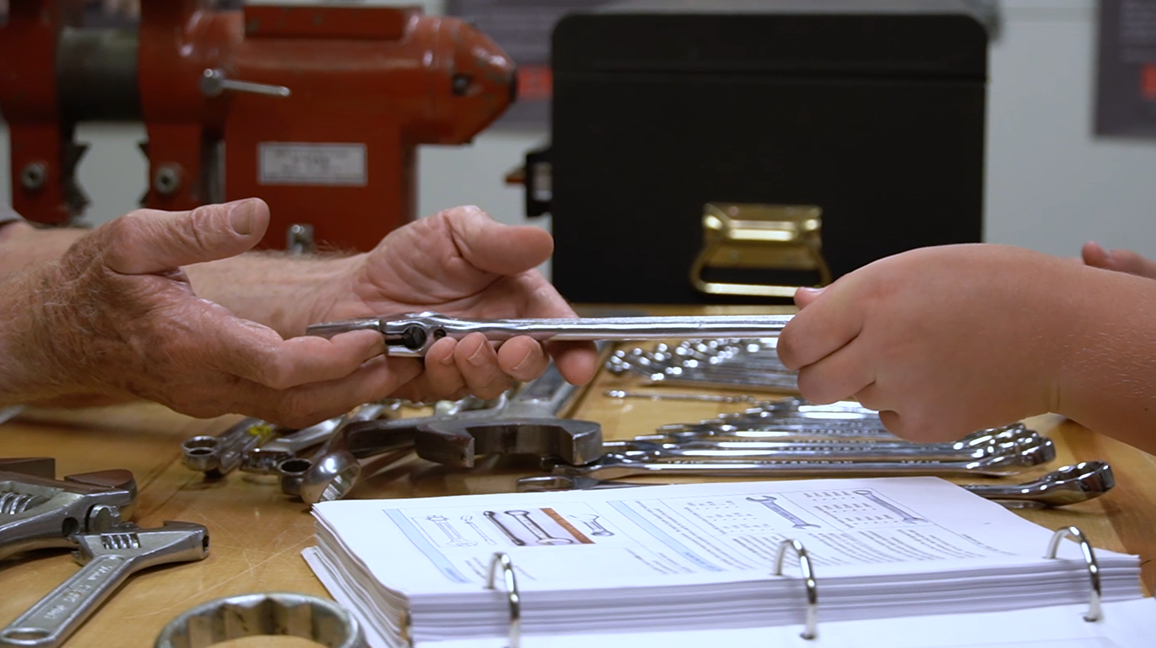
Some hinges have a depth adjustment screw located deeper inside the hinge arm. Turning this adjusts how far the door sits from the cabinet face.
5. Fine-Tune Both Hinges; Close and Check
Always make small adjustments—just a quarter turn at a time. Alternate between the top and bottom hinges to maintain even spacing and flush alignment.

After each adjustment, close the door and check its alignment. Repeat until everything lines up neatly.

A misaligned cabinet door might seem like a small issue—but when you’ve got toolmanship, it’s just another opportunity to solve a problem with skill and care.

At Bendix Academy, we’re raising up a generation of students who don’t walk past broken things—they fix them. And with each small repair, they grow into more capable, confident citizens. That’s the power of mechanical self-reliance—starting with a hinge and extending into a lifetime of useful service.

So the next time you see a crooked cabinet door, don’t tolerate it. Fix it! It’s a simple adjustment that anyone can make—and it’s a reminder of how a little toolmanship can go a long way.

See Bendix Academy in Action

A picture speaks a thousand words, but a visit is priceless.  Bendix Academy invites everyone with interest to email toolmen@bendixacademy.org or call us at 810-599-4035 to schedule a tour (no walk-ins please) and see why we’re growing.

You’ll experience the impact firsthand!

Support the Next Generation

Want to make a difference?  Just $5/month can help a student discover a lifetime of skills. Just click on the red button to support with your donation of any amount. Every contribution counts!


Toolman Times quarterly newsletter PDF archives

Bendix Academy QR Quarterly Newsletter - Toolman Times

See recent Quarterly Newsletter articles in depth

Bendix Academy QR Quarterly Newsletter Posts and Stories


Join us in shaping Tomorrow’s Toolmen Today!

WE ARE BUILDING a place for generations to explore, teach, and learn the mechanical world together, creating Tomorrow’s Toolmen Today.